Fresh Roasted Coffee Delivery for Offices: 2026 Guide
Table of Contents
- Why Fresh Roasted Coffee Delivery for Offices Beats Shelf-Stable Bags
- Office Coffee Delivery: What to Compare Before You Sign
- Whole Bean Coffee for Offices vs. Ground and Capsule Formats
- Coffee Subscription for Offices: Matching Delivery Frequency to Headcount
- Total Cost of an Office Coffee Program: Price per Pound and Beyond
- Equipment, Workflow, and Consumption Planning for Busy Firms
- Frequently Asked Questions
Last Updated: October 9, 2026
Why Fresh Roasted Coffee Delivery for Offices Beats Shelf-Stable Bags
Fresh roasted coffee delivery for offices solves a problem most firms do not realize they have: the coffee in the break room stopped tasting good weeks ago. Coffee is an agricultural product, and like any agricultural product, it declines with time. The gap between what a bag tastes like at the roastery and what it tastes like after months on a shelf is enormous, and it is the single biggest reason break room coffee earns a reputation for being tolerated rather than enjoyed.
At Defensive Grounds, we roast to order for exactly this reason. Every bag is specialty-grade and roasted in small batches, then shipped, so it arrives near peak flavor rather than after a long warehouse stay. That distinction matters more in a legal office than almost anywhere else, because the people drinking it are running on deadlines, not on patience.
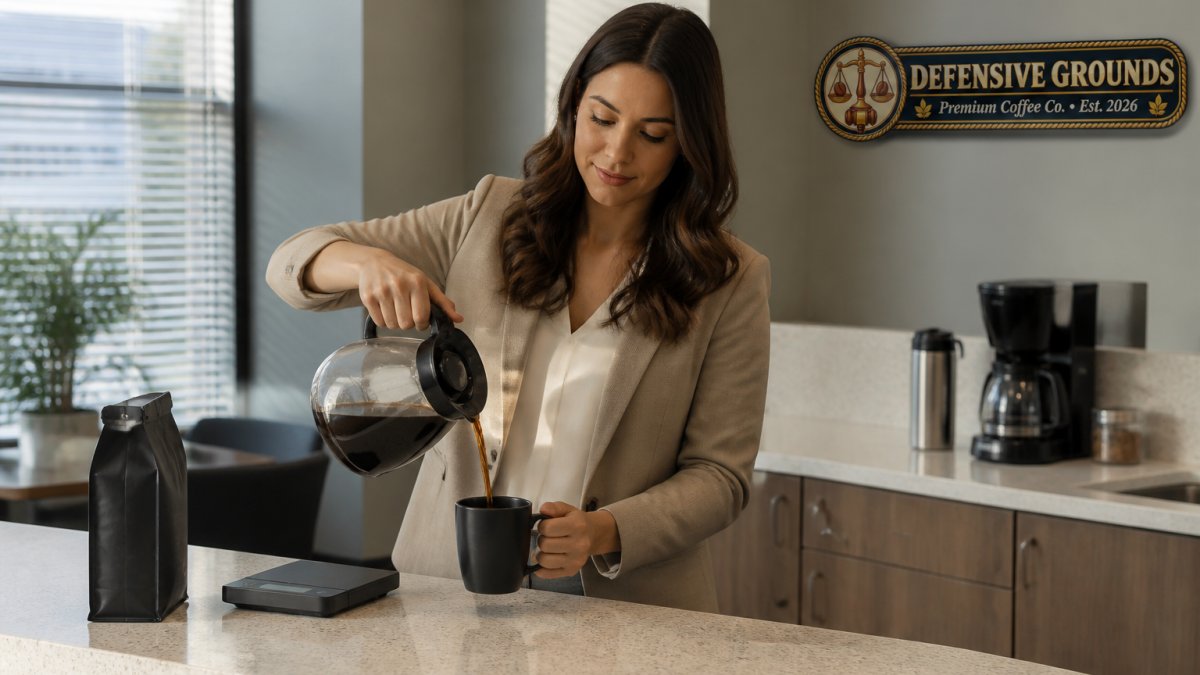
How Roast Dates and Roast-to-Shipment Time Affect the Cup
A roast date tells you when the clock started. Coffee begins losing its volatile aromatic compounds within days of roasting, and the decline accelerates once the bag is opened. A short roast-to-shipment window is the most reliable freshness signal a roaster can offer, and it is the first thing a buyer should verify.
Pro Tip
Ask any roaster for their typical roast-to-shipment window before you commit. A roaster who roasts to order will answer immediately. A roaster who cannot answer is usually selling inventory, not freshness.
Office Coffee Delivery: What to Compare Before You Sign
Comparing office coffee delivery options comes down to five things: roast date transparency, format flexibility, delivery frequency, order minimums, and how the vendor handles problems. Price matters, but it is the easiest variable to compare and the least predictive of daily satisfaction.
Use this checklist when evaluating a vendor:
- Does the roaster print a roast date on every bag?
- Can you mix whole bean and pre-ground in one order?
- Are delivery intervals adjustable as headcount changes?
- Is there a minimum order size, and does it fit your volume?
- What happens if a shipment arrives late or damaged?
- Can the vendor scale up for a trial-heavy month?
A common mistake is signing an annual contract before testing a single shipment. Run one order through your actual break room workflow first. If the coffee is stale by week three, the contract terms will not save you.
Whole Bean Coffee for Offices vs. Ground and Capsule Formats
Whole bean coffee for offices wins on freshness, because grinding immediately before brewing exposes far less surface area to oxygen. Ground coffee is convenient but starts declining the moment it is ground. Capsules solve a different problem: consistency and speed with zero cleanup, at a higher cost per cup.
| Format | Freshness | Convenience | Best For |
|---|---|---|---|
| Whole bean | Highest | Requires grinder | Firms with a grinder and a coffee culture |
| Pre-ground | Moderate | Immediate | Small teams without equipment |
| Capsules | Sealed until use | Highest | High-turnover break rooms, minimal cleanup |
For a firm of eight, pre-ground or a sample pack makes more sense than committing to bulk. Defensive Grounds offers a Best Sellers Sample Pack that lets a small office taste across roasts before choosing a standing order, and a 60 Pack Single Serve Coffee Capsules option for teams that want capsule convenience without giving up a fresh-roasted blend.


Coffee Subscription for Offices: Matching Delivery Frequency to Headcount
A coffee subscription for offices works best when the cadence matches actual consumption, not guesswork. The reliable planning figure is roughly one 12-ounce bag per two to three people per week, adjusted for how many attorneys actually drink coffee and how many are in trial that month.
Start with a monthly delivery and track how fast the supply disappears. If bags run out before day twenty, move to biweekly. If coffee lingers past a month, you are over-ordering and paying for staleness.
Watch Out
Ordering in bulk to hit a discount is the most common freshness mistake. A six-month supply of coffee is a six-month supply of declining flavor. Match order size to a four-to-six week consumption window.
Total Cost of an Office Coffee Program: Price per Pound and Beyond
The total cost of an office coffee program is rarely just the coffee. Price per pound is the visible number, but equipment, filters, dairy, sweeteners, cups, cleaning, and staff time all sit on the same ledger. A cheaper bag that requires more labor or generates more waste can cost more per cup than a premium one.
The useful unit of comparison is cost per cup, not cost per pound. A 12-ounce bag of whole bean coffee yields roughly 24 to 30 eight-ounce cups depending on brew strength and grind, so a $24.99 bag lands somewhere between about $0.83 and $1.04 per cup before any other line item.
Break the math into four buckets, not three:
- Coffee: price per pound multiplied by monthly volume, converted to cost per cup
- Equipment and supplies: grinder, brewer, filters, cups, lids, stirrers, condiments, and cleaning supplies
- Delivery and service: shipping fees, fuel or handling surcharges, order minimums, and any per-delivery or account fees
- Labor and waste: restocking time, cleanup, and coffee poured down the drain when a batch sits too long
Delivery is the bucket buyers most often forget. Free shipping is not universal in this category, and a vendor that charges a flat per-order fee can quietly add several dollars to every shipment, which matters more, not less, when a small office orders frequently to stay fresh. A vendor that ships free removes that variable entirely and makes the per-cup math honest.
Equipment is the second hidden line. A batch brewer, a grinder, and a thermal carafe are one-time or occasional costs, but they should be amortized across the months they serve. Divide the purchase price by the number of months you expect the equipment to last, then add that figure to your monthly coffee spend before comparing vendors.
Waste is the third. Coffee brewed and not drunk is money spent and thrown away. A batch brewer that holds coffee on a hot plate for hours produces both a worse cup and more waste than a thermal carafe or an on-demand single-cup format. If your team pours out a third of every pot, the effective cost per cup is roughly 50 percent higher than the bag price suggests.
Pro Tip
Build a one-page cost-per-cup worksheet before you take a vendor meeting. List coffee, equipment amortization, supplies, delivery, and an estimated waste factor. Vendors who cannot speak to all five are usually selling a bag, not a program.
A practical way to run the comparison is to hold volume constant. Pick a realistic monthly figure for your office, say, the number of cups your team actually drinks in a typical week multiplied by four, and price that same volume through each vendor, including delivery and any minimums. The vendor with the lowest cost per cup at your real volume is the one worth a trial, regardless of which bag looks cheapest on the shelf.
Finally, treat contract terms as a cost. Annual commitments, auto-renewals, and minimum-order clauses carry a real cost when headcount changes, a trial-heavy month arrives, or the coffee stops being drunk. Flexibility is worth paying a small premium for, because the cheapest locked-in program is expensive the moment it no longer fits the office.
Equipment, Workflow, and Consumption Planning for Busy Firms
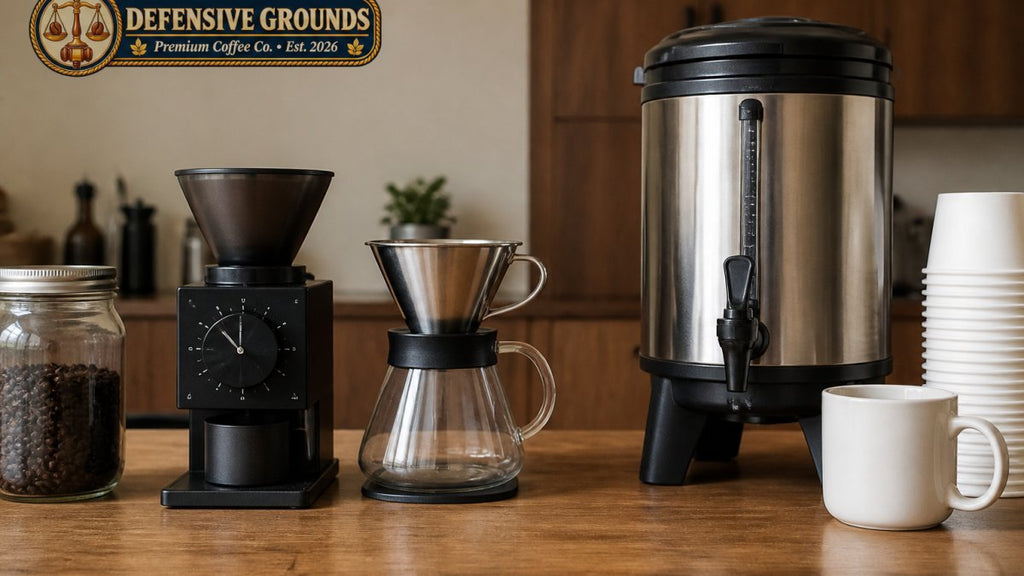
Equipment and workflow decide whether a good bean actually produces a good cup. A quality grinder, a brewer sized to your peak hour, and a clear restocking routine matter more than any single coffee choice. Consumption planning is the piece most firms skip, and it is where the daily frustration lives.
Start with a consumption estimate, not a guess. A workable planning figure is roughly one 12-ounce bag per two to three people per week for a team that drinks coffee daily, adjusted for how many people actually drink it and how many are traveling, in trial, or out of the office in a given month.
Match the brewer to the peak, not the average. A firm where most people arrive between 8:30 and 9:00 needs a batch brewer with enough capacity to serve that window without a queue, not a single-cup machine that creates a line at the worst possible moment.
Match the grind to the equipment. Whole bean coffee gives you the most control, but only if the grinder is set correctly for the brewer. A batch brewer wants a medium grind; an espresso machine wants a fine, consistent grind; a French press wants a coarse grind.
Delivery logistics deserve the same planning as the coffee itself. Most roasters ship on a fixed schedule, and orders placed after a weekly cutoff typically move to the next cycle. Know your vendor's cutoff day, and place standing orders so a shipment lands before the current supply runs out, not after.
Prevent stockouts with a simple two-bin system. Keep one bag in active rotation and one sealed backup bag on the shelf, and reorder when the active bag is opened rather than when it is empty. That single habit absorbs a late shipment, a busy week, or an unexpected all-hands without anyone running out.
A short trial run tells you more than any spec sheet. Order one cycle at your estimated volume, track how fast it disappears, note whether the morning rush clears without a line, and check whether the last bag still tastes fresh when it is opened. Adjust the cadence, the format, or the brewer based on what you observe, then set the standing order.
Frequently Asked Questions
How often should an office order fresh coffee?
Match the order to your weekly consumption. A 10-person firm drinking two cups each per workday goes through roughly 100 cups a week, which is about 5 to 6 pounds of coffee. Ordering weekly or biweekly keeps the supply inside the 2-to-4-week window after the roast date when flavor holds up best. If your team is smaller, a sample pack or a single 12-ounce bag every two weeks prevents stale beans sitting in the cabinet.
How much coffee should an office order each month?
Start with a per-person estimate of 2 to 3 cups per workday, then multiply by your headcount and average 20 workdays. A 15-person office at 2.5 cups each lands near 750 cups a month, roughly 40 pounds of ground coffee or 45 pounds of whole bean. Track actual usage for the first two months and adjust the delivery frequency rather than guessing again.
Should an office choose whole-bean or ground coffee?
Whole bean coffee for offices holds its flavor longer because the oils stay protected inside the bean, so it works better when you order in bulk and brew all week. Ground coffee is faster for high-turnover break rooms where nobody wants to grind. A practical split: whole bean for the main drip station, pre-ground or single-serve capsules as backup for late nights and conference rooms.
What should you look for in an office coffee delivery service?
Check four things: the roast date printed on the bag, the roast-to-shipment window, delivery coverage and speed, and whether the subscription can flex when your headcount changes. Free shipping matters more at office volumes because it changes the price per pound. Ask whether the vendor offers whole bean, ground, and capsule formats so you are not juggling two suppliers.
Is freshly roasted coffee worth it for an office?
It depends on volume. A firm that finishes a bag within two weeks gets the full benefit of peak flavor. A firm that opens one bag a month may not notice the difference as much. For high-volume break rooms, fresh roasted coffee from a roast-to-order roaster keeps the cup consistent, which matters when the same pot has to satisfy partners and summer associates alike.
How do you keep coffee fresh in an office?
Store beans in an airtight container away from light, heat, and the office kitchen's steam. Buy in quantities you finish within two to four weeks of the roast date. Keep the grinder clean and grind just before brewing. If you use single-serve capsules, the sealed packaging helps, but check the roast date on the box the same way you would on a bag.