Benefits of Small Batch Roasted Coffee
Table of Contents
- What Small-Batch Roasting Actually Means
- Small-Batch Coffee vs. Mass-Produced Coffee
- Freshly Roasted Coffee Benefits: Flavor, Aroma, and Body
- How to Choose Freshly Roasted Coffee Beans
- What Makes Specialty Coffee Worth the Price
- The Trade-Offs: Who Benefits Most from Small-Batch Coffee
- Frequently Asked Questions
Last Updated: October 17, 2026
What Small-Batch Roasting Actually Means
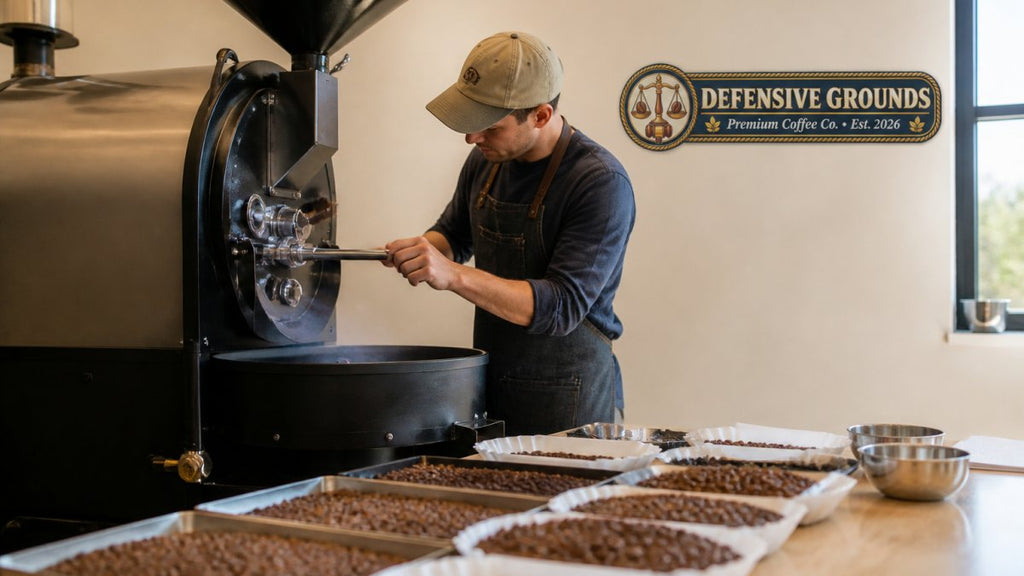
Small-batch roasting is the practice of roasting coffee in limited quantities, typically in batches measured in pounds rather than the hundreds of pounds a commercial roaster handles at once. That smaller batch size gives the roaster tighter control over heat application and temperature changes throughout the roast.
At Defensive Grounds, we roast to order for exactly this reason: a smaller batch responds faster to adjustments, so the roast profile we designed is the roast profile you actually get. The benefits of small batch roasted coffee start with that control, and everything else flows from it.
Batch Size, Control, and the Roast Profile
A roast profile is the recorded plan of how heat and airflow change over the course of a roast. In a small drum, the roaster can nudge temperature in small increments and hear, smell, and see the beans respond in real time.
Large batches move more slowly and less evenly. The outer edges of a big drum can run hotter than the center, which is how you end up with scorched beans sitting next to underdeveloped ones in the same load. Smaller batches reduce that gap, which is why even roast quality is one of the most consistent benefits of small batch roasted coffee.
Small-Batch Coffee vs. Mass-Produced Coffee
The core difference between small-batch coffee and mass-produced coffee is what each process optimizes for. Small-batch roasting optimizes for precision and flavor; commercial roasting optimizes for volume, consistency across huge runs, and shelf life. But the honest version of this comparison is more nuanced than "small equals better," because batch size is only one variable among several.
What Batch Size Actually Changes, and What It Doesn't
Batch size is not a quality guarantee on its own. It is a lever that makes certain outcomes easier to hit. Here is how to separate the differences that are inherent to batch size from the ones that depend on something else:
- Inherent to batch size: A smaller mass of coffee responds faster to changes in heat and airflow, so a roaster can make smaller, more frequent adjustments during the roast. A larger mass has more thermal inertia, so adjustments take longer to register across the whole load.
- Depends on equipment: A well-instrumented large drum with good airflow and probe placement can roast very evenly. A poorly built small roaster can scorch a two-pound batch. Batch size helps, but the machine still has to be capable.
- Depends on skill: A roaster who reads bean color, smell, and sound well will outperform one who doesn't, regardless of batch size. Small batches give a skilled roaster more room to work; they don't create skill.
- Depends on sourcing: Green coffee quality sets the ceiling. A great roast of a mediocre lot is still a mediocre cup. Small-batch roasting protects character that has to be there in the first place.
- Depends on freshness: This is often the largest single factor in the cup, and it is only loosely tied to batch size. A small roaster who warehouses beans for months can ship staler coffee than a large roaster who ships fast.
That last point matters most. A common pattern in the industry is that the freshness gap between small and large roasters is bigger than the roast-control gap. Roast-to-order shipping is what puts small-batch coffee in your grinder within days of roasting instead of weeks or months.
| Factor | Small-Batch Roasting | Commercial Roasting |
|---|---|---|
| Batch size | Pounds at a time | Hundreds of pounds |
| Roast control | Tight, adjusted in real time | Limited by batch volume |
| Typical roast-to-ship gap | Days | Weeks to months |
| Flavor focus | Origin character and complexity | Uniformity and shelf stability |
| Best for | Drinkers chasing flavor | High-volume, low-cost supply |
A Clear Definition of "Small Batch"
There is no universal batch-size threshold that makes a roast "small batch." No regulator or standards body defines the term, and roasters apply it differently. Some shops call anything under 30 pounds small batch; others mean under 12 pounds; some use it to describe any roast done to order rather than held in inventory.
That means the label alone tells you very little. What you can actually verify is the roast date, the ship date, and whether the roaster will tell you the batch size and the roast profile. A roaster who answers those questions is giving you something more useful than a marketing phrase.
Why Commercial Roasting Trades Precision for Volume
Mass-produced coffee is roasted in very large batches and often packaged well before it ships to a warehouse, then a distributor, then a shelf. That supply chain can add weeks or months between the roast date and your first cup. The trade-off is real: large runs deliver lower cost per pound and predictable supply, which is exactly what a grocery chain or a large foodservice account needs.
Neither approach is dishonest. They simply serve different buyers. If your priority is the lowest possible cost per pound at scale, commercial coffee delivers that. If your priority is what's in the cup, small-batch roasting is the better tool, provided the roaster also ships fresh and sources well.
Freshly Roasted Coffee Benefits: Flavor, Aroma, and Body
Freshly roasted coffee benefits show up first in aroma, then in flavor complexity and body. Coffee is at its most expressive in the days and weeks after roasting, when the oils and aromatic compounds that carry brightness, sweetness, and distinct flavor are still intact.
Roast date matters more than most labels admit. A bag with a "best by" date tells you almost nothing about when the coffee was actually roasted.
How Freshness Fades After the Roast Date
Freshness declines gradually, not overnight. In the first week or two after roasting, coffee tends to taste brightest and most layered. Over the following weeks, those top notes fade and the cup flattens toward a dull, generic taste.
That decline is why roast-to-order matters. Coffee roasted the week it ships reaches you near its peak instead of already past it. Single-origin beans make the difference even easier to taste, because there's no blend to hide behind. Our Single Origin Favorites Sample Pack ($24.99) includes six 2-ounce packs so you can compare origins side by side and taste how much freshness and origin character actually change the cup.

How to Choose Freshly Roasted Coffee Beans
Choosing freshly roasted coffee beans comes down to three checks: a printed roast date, a believable roast-to-order claim, and packaging that protects the beans. Skip any one of these and you're guessing.
Reading a Roast Date and Verifying Quality
- Look for a specific roast date, not just a "best by" date
- Confirm the roaster ships within days of roasting
- Check that the bag has a one-way degassing valve
- Buy whole bean when you can, and grind just before brewing
- Start with a sample pack if you're new to the roaster
Pro Tip
If a bag lists only a "best by" date, ask the roaster directly when it was roasted. A roaster who roasts to order can answer that question in seconds. One who can't probably isn't roasting to order.
Once you've confirmed freshness, roast-to-cup guidance matters too. Store beans in an airtight container away from light and heat, and brew within a few weeks of the roast date for the best results.
What Makes Specialty Coffee Worth the Price
Specialty coffee earns its price through traceability, careful sourcing, and small-batch roasting that protects the bean's character. You're paying for a known origin, a documented process, and a roast built around that specific bean rather than around whatever blends cheapest. But "worth it" depends on what you actually value, so it helps to separate verifiable claims from marketing language.
Verifiable Sourcing vs. Unsupported Claims
Some sourcing claims can be checked, and some cannot. The ones you can verify tend to be specific:
- Named origin details: country, region, farm or cooperative, altitude, and processing method (washed, natural, honey, anaerobic). Specifics are harder to fake than adjectives.
- Producer relationships: a roaster who can name the importer or the producer group, or describe how long they've bought from a lot, is showing a real supply chain.
- Certifications: third-party labels such as Fair Trade, Rainforest Alliance, or USDA Organic are auditable. They are not the only measure of good sourcing, but they are checkable.
- Packaging practices: recyclable or compostable bags, and whether the roaster ships in minimal packaging, are observable facts rather than promises.
Claims like "ethically sourced" or "sustainable" without any of the above are hard to verify. Treat them as a starting point for a question, not an answer.
The Trade-Offs You Should Know Before You Buy
Small-batch and specialty coffee come with real costs, and a balanced article should name them:
- Price per pound: specialty coffee typically costs more than commodity coffee, sometimes several times more. That premium pays for sourcing, smaller runs, and labor.
- Availability: limited lots sell out. A coffee you love this month may be gone next month, and the replacement lot will taste different.
- Batch variation: small-batch roasting means small variations between roasts. That is part of the appeal for some drinkers and a frustration for others who want the exact same cup every time.
- Shelf life: fresh coffee is best within a few weeks of the roast date. Buying in bulk to save on shipping works against freshness unless you freeze properly.
- Convenience: you often have to buy direct, wait for shipping, and grind yourself to get the most out of it.
Who Actually Benefits Most
The people who get the most value from specialty small-batch coffee are daily drinkers who notice flavor differences and are willing to pay a premium for them. If you drink one cup a week or mostly use coffee as a caffeine delivery system, the premium is harder to justify. If coffee is part of your routine and you care what it tastes like, the difference is usually obvious.
Take our Whiskey Barrel Aged ($24.99): a single-origin Guatemalan coffee aged 30 days in a bourbon barrel, then roasted to order. That's a specific process applied to a specific bean, and it's the kind of detail that separates specialty coffee from commodity coffee.

Transparency is part of the value. When a roaster names the grower, region, altitude, and processing method, you can trace what you're drinking. That traceability is one of the clearest benefits of small batch roasted coffee, because small roasters buy in limited quantities and often know exactly where those lots came from.
Key Takeaway
Price in specialty coffee buys traceability and roast precision, not just a nicer bag. If you can't tell where the coffee came from or when it was roasted, you're paying a premium for branding.
The Trade-Offs: Who Benefits Most from Small-Batch Coffee
Small-batch coffee isn't the right call for everyone. It costs more per pound than commercial coffee, and limited quantities mean your favorite lot can sell out. If you need thousands of pounds at a fixed price, commercial supply chains exist for good reason.
For most drinkers, though, the trade-off favors small-batch. The people who benefit most are those who drink coffee daily and actually notice the difference: flavor complexity, aroma, and a cup that tastes like the origin instead of like a roast level.
That describes a lot of legal teams. Long hours and late nights make coffee a working tool, not a treat, and a flat cup does nobody favors at hour eleven. Our Best Sellers Sample Pack ($24.99) lets a firm test six coffees before committing to a break room supply, and every bag ships free.

Watch Out
Don't judge a roaster by a single bag bought off a shelf with no roast date. Coffee that's been sitting for months will taste flat no matter how good the roaster is. Buy direct, check the date, and give the coffee a fair shot.
Frequently Asked Questions
What are the benefits of small-batch roasted coffee?
Small-batch roasting gives the roaster tighter control over heat application and timing, which means a more even roast and fewer scorched beans. The result is a cleaner flavor profile with more distinct notes of sweetness, acidity, and body. Because small-batch coffee is typically roasted to order, it also reaches you fresher, so the aroma and taste hold up longer than mass-produced bags that sit in warehouses.
How is small-batch coffee different from mass-produced coffee?
Mass-produced coffee is roasted in large volumes where consistency is prioritized over nuance. Small-batch coffee uses smaller roasts, so the roaster can adjust the roast profile for each origin and make sure every bean develops evenly. That attention to detail produces better roast consistency and lets the natural bean characteristics, like a Kenya's bright acidity or a Bali Blue's molasses sweetness, come through instead of tasting flat or over-roasted.
How can you tell if coffee is freshly roasted?
Check the roast date on the bag, not just the best-by date. Freshly roasted coffee is typically at its best within two to four weeks of the roast date. Look for bags that list a specific roast date and come from a roaster that roasts to order. When you open the bag, fresh beans release a noticeable aroma and may still have some natural oils on the surface. If the bag has no roast date, you cannot verify freshness.
Is small-batch coffee worth the price?
Small-batch coffee usually costs more because of smaller roast volumes, better green coffee beans, and the labor involved in monitoring each roast. For firms that go through coffee daily, the difference shows up in flavor consistency and less waste from coffee that tastes stale. A sample pack like Defensive Grounds' Single Origin Favorites Sample Pack at $24.99 lets you try six origins before committing to a full-size bag.
Coffee quality is easy to claim and harder to prove. The proof is a roast date you can read, an origin you can trace, and a cup that tastes like something specific. Defensive Grounds roasts to order in small batches, ships free anywhere in the United States, and builds every bag around specialty-grade beans with the sourcing details printed right on the label. Get started with Defensive Grounds and give your team coffee that holds up through the longest nights on the docket.
Related post
17
Oct