Best Coffee for High-Pressure Legal Offices
Table of Contents
- Why Legal Offices Need a Different Coffee Strategy
- What to Look for in Commercial Coffee for Offices
- Best Office Coffee for Employees: Top Blends Compared
- Single-Origin vs. Blended Beans for High-Stakes Work
- Coffee Gifts for Law Firm Staff: Beyond the Break Room
- Equipment Maintenance and Etiquette in Shared Legal Spaces
- Cost-Benefit Analysis: Is Premium Coffee Worth It for Your Firm?
- Frequently Asked Questions
Last Updated: October 7, 2026
Why Legal Offices Need a Different Coffee Strategy
The best coffee for high pressure legal offices has to do more than taste good.
At Defensive Grounds, we built our lineup around this problem. Lawyers, paralegals, and office managers told us the same thing: the coffee ran out, the pot burned, and everyone crashed by 3 p.m.
Below, we compare the top blends for legal teams, explain what to look for in commercial coffee for offices, and cover the etiquette and equipment details most guides skip.
What to Look for in Commercial Coffee for Offices
Commercial coffee for offices is purchased in bulk or subscription format for a shared workplace, chosen for consistency, caffeine level, and performance across brewing methods. Three factors matter most for a legal team: caffeine content, roast level, and acidity.
Caffeine Content and Roast Level
Caffeine content varies by bean type and roast. Robusta carries more caffeine than arabica, so a blend with added robusta delivers a stronger lift than a pure arabica single-origin.
Roast level changes flavor more than caffeine. Dark roasts taste bolder and less acidic; medium roasts keep more of the bean's natural sweetness and chocolate undertones. For a team that drinks coffee from morning through midnight, a medium roast with a caffeine boost tends to work better than a dark roast that turns bitter after the fourth pot.
Acidity, Antioxidants, and Low-Acid Options
Acidity matters for anyone drinking six cups a day. Coffee is naturally acidic, and high-acid cups can irritate the stomach over long shifts.
Coffee also contains antioxidants, one more reason it fits an office wellness plan. If heartburn or reflux is a recurring complaint in your break room, switching to a smoother blend is a practical fix.
Best Office Coffee for Employees: Top Blends Compared
The best coffee for high pressure legal offices balances caffeine, flavor, and ease of brewing for a crowd. Here is how our top three blends stack up for legal teams.

| Blend | Roast | Key Trait | Best For | Price |
|---|---|---|---|---|
| Max Caf Blend | High-caffeine blend | Tanzania and India Robusta | Late-night trial prep | $24.99 |
| Breakfast Blend + | Medium | House blend plus robusta | All-day office drinking | $24.99 |
| Coffee with Mushrooms | Medium or dark | Lion's Mane, Cordyceps, Reishi | Sustained focus | $20.99 |
Max Caf Blend: Highest Caffeine for Late-Night Trial Prep
Max Caf Blend is our highest-caffeine option, built from Tanzania and India Robusta. That robusta base separates it from a standard office pot.

Where it falls short: a full pot of Max Caf at 9 a.m. is too much for most people. We recommend it as the second pot of the day, or as the dedicated late-night option.
Breakfast Blend +: Medium Roast with Extra Robusta
Breakfast Blend + is our house breakfast blend with added robusta for extra caffeine. At a medium roast, it stays smooth enough to drink all day. This is the blend we would put in a firm's main break room: it handles many palates, works in drip machines and pour-over setups, and does not turn harsh on a warmer.

What most guides miss is that "medium roast" does not mean weak. The added robusta gives it a real kick without the burnt edge of a dark roast.
Coffee with Mushrooms: Functional Blends for Sustained Focus
Coffee with Mushrooms is specialty-grade coffee infused with Lion's Mane, Cordyceps, and Reishi mushrooms, in medium roast, dark roast, and decaf. The pitch is sustained energy rather than a sharp spike. For attorneys avoiding the caffeine crash before an afternoon hearing, it is a smart alternative to a third cup of high-caf coffee.

Pro Tip
Rotate your break room between a high-caffeine blend and a functional blend. Teams that keep one option at each caffeine level report fewer complaints about jitteriness and fewer afternoon slumps.
Single-Origin vs. Blended Beans for High-Stakes Work
Blended beans win for office coffee in almost every legal setting, but the reason is more specific than "consistency." It comes down to three variables: crop variance, extraction tolerance, and caffeine predictability.
Crop variance. Single-origin coffee is one harvest from one region.
Extraction tolerance. Legal offices rarely brew with precision.
Caffeine predictability. Caffeine in a single-origin arabica varies with bean density, roast level, and lot.
When Single-Origin Actually Makes Sense in a Firm
There are two situations where single-origin earns its place in a legal office:
- A dedicated coffee program. With a barista-trained staff member, a calibrated grinder, and a brew method dialed in daily, single-origin is a legitimate upgrade, common in firms that host clients in-house and treat coffee as hospitality.
- A rotating "featured origin" alongside a house blend. Keep the blend as the default and offer one single-origin as a limited-run option. Enthusiasts get variety; everyone else gets the reliable cup.
The Cost and Logistics Reality
Single-origin beans typically cost more per pound than a comparable blend because supply is smaller and less flexible. They also demand fresher turnover, one that sits in a cabinet for six weeks loses the character that justified the price. For most firms, the answer is a house blend as the workhorse and single-origin as an occasional or client-facing option.
Watch Out
Do not buy single-origin beans in bulk for a shared office unless you have a dedicated coffee program. The flavor shifts between lots, and you will field complaints from people who liked the last bag.
A Simple Decision Rule
- If the coffee is brewed by whoever walks into the kitchen first: blend.
- If the coffee is brewed by a trained staff member on a calibrated setup: single-origin is viable.
- If the coffee is served to clients as part of hospitality: offer both, with the blend as the default.
That rule covers the vast majority of legal offices without requiring anyone to become a coffee expert.
Coffee Gifts for Law Firm Staff: Beyond the Break Room
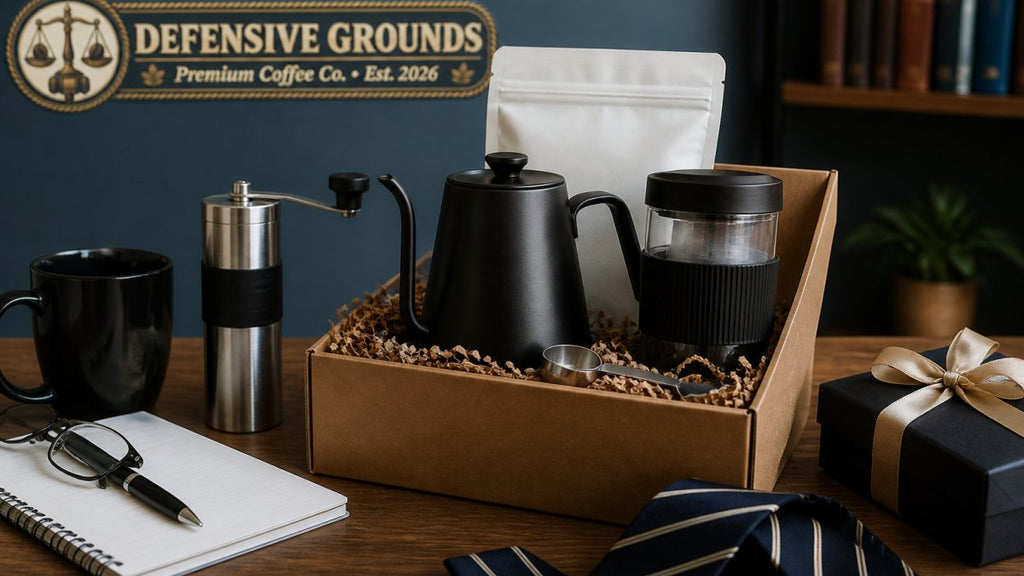
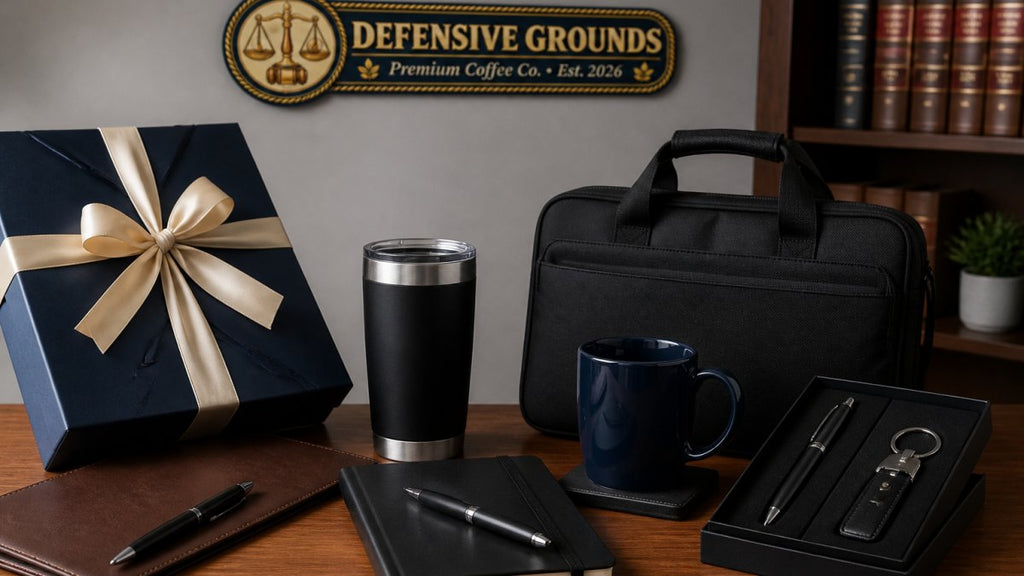
Coffee gifts for law firm staff work best when they feel considered rather than generic.
For client gifting, a small-batch roast signals attention to detail.
Our 60 Pack Single Serve Coffee Capsules and 12 Pack Single Serve Coffee Capsules are the easiest gift format for a firm.
For smaller practices, a single bag of Breakfast Blend makes a clean, low-commitment gift.
Equipment Maintenance and Etiquette in Shared Legal Spaces
Shared office coffee equipment fails for predictable reasons: nobody descales the machine, nobody empties the grounds, and the last person to brew never starts a new pot.
A simple maintenance rhythm solves most of it:
- Descale the machine every four to six weeks, or more often with hard water
- Rinse the carafe and filter basket after every pot
- Assign a weekly deep-clean rotation among staff
- Keep single-serve capsules stocked so nobody is stuck waiting on a brew cycle
- Label the beans by roast so people know what they are drinking
Etiquette matters too. In a firm where a partner and a first-year associate share the same kitchen, refilling the pot when you take the last cup is not just polite. It is part of the culture.
Key Takeaway
The most common break room complaint is not about coffee quality. It is about running out. A subscription with a fixed delivery schedule removes that problem entirely.
Cost-Benefit Analysis: Is Premium Coffee Worth It for Your Firm?
Most office coffee guides skip the math because it is uncomfortable. Legal firms run on billable-hour economics, so the right question is not "is premium coffee cheaper than generic?" It is "what does the coffee program cost per billable hour, and what does a bad one cost in lost time?"
The Per-Cup Math
Start with the raw numbers. A 12-ounce bag of specialty-grade coffee brews between 24 and 34 cups at standard strength (roughly 1 to 1.5 tablespoons per 6 ounces of water).
The gap looks large until you compare it to the alternatives:
- Coffee shop run: $3 to $6 per drink, plus 10 to 20 minutes of round-trip time.
- Single-serve pods: $0.50 to $1.25 per cup, plus the waste and the machine maintenance.
- Break room premium beans: $0.73 to $1.04 per cup, brewed in place.
For a firm where the average billable rate is measured in hundreds of dollars per hour, the 15 minutes saved on a coffee run is worth more than the entire month's coffee budget.
The Hidden Costs of Cheap Coffee
Generic coffee is not free. It carries costs that do not show up on the invoice:
- Wasted cups. When coffee tastes bad, people pour it out and buy something else. A dumped pot is a pot you paid for and did not drink.
- The 3 p.m. crash. Lower-quality beans and inconsistent brewing correlate with sharper caffeine spikes and harder crashes, which matters when the afternoon is when document review and client calls happen.
- Stomach complaints. High-acid coffee across a 10-hour day drives heartburn and reflux, which drives antacids, which drives distraction. Low-acid and cold brew options reduce this without giving up caffeine.
- Morale and retention signals. A break room is one of the few shared spaces in a firm. What is in it communicates how the firm treats the people who work there.
A Framework for Justifying the Spend
To make the case to a managing partner or office manager, frame it in three numbers:
- Cost per cup at your current setup versus a premium setup.
- Cups per day across the office (roughly 2 to 3 per person on a full day).
- Minutes saved per person per day by not leaving for coffee, multiplied by a conservative internal hourly cost.
In most firms, the premium program wins on the third number alone. The first two just make the case legible.
When Premium Coffee Is Not Worth It
Be honest about the exceptions. Premium coffee is a poor fit if:
- The office has fewer than five regular coffee drinkers and no client-facing need.
- Nobody will own the maintenance rotation, so the machine degrades regardless of bean quality.
- The firm is in a temporary space or transition period where a subscription commitment does not make sense.
In those cases, a smaller capsule pack or a single bag is the right entry point. The goal is not to maximize spend, it is to make sure the coffee purchased actually gets drunk.
Key Takeaway
Premium coffee is not a cost center. It is a productivity input. Run the per-cup math, run the time-saved math, and let the second number make the decision.
Frequently Asked Questions
What coffee works best for a busy law office?
A medium-roast blend with balanced caffeine works best for most legal offices. It provides steady energy without the sharp crash that can hit during afternoon depositions. For firms needing higher output, a high-caffeine blend like Max Caf delivers more punch, while low-acid options protect stomachs during long shifts. The key is matching the roast to your team's schedule and stress levels.
What should a law firm look for in an office coffee service?
Prioritize freshness, roast-to-order delivery, and low-acid options. Specialty-grade beans matter. Check caffeine content per serving, available bag sizes for your headcount, and whether the service offers single-serve pods for convenience. Equipment maintenance support and reliable shipping also prevent break room downtime during critical filing periods.
How much coffee should an office order for its staff?
Plan for two to three cups per person daily as a baseline. A 10-person firm typically goes through 60 to 90 servings per week, so a 60-pack of single-serve capsules or two 12-ounce bags covers roughly one week. Adjust upward during trial season or end-of-quarter filing crunches. Ordering smaller quantities more frequently keeps coffee fresh and reduces waste.
Is 200 mg of caffeine equal to a cup of coffee?
An 8-ounce brewed cup typically contains 95 to 165 mg of caffeine, so 200 mg is closer to a 12-ounce serving or a strong mug. High-caffeine blends can exceed that in a single cup. For legal professionals managing intake across long days, tracking total milligrams matters more than counting cups, especially when mixing espresso shots with drip coffee.
What coffee works best for high blood pressure?
Low-acid, water-process decaf options are the safest choice for anyone managing blood pressure. Decaf Espresso and Decaf Coffee With Mushrooms deliver flavor without the caffeine load. If you still want some caffeine, a half-caf blend splits the difference. Always check with a doctor about how coffee interacts with your specific health situation.