How to Impress Clients With Thoughtful Gifts
Table of Contents
- Why Thoughtful Gifts Beat Generic Swag Every Time
- A Step-by-Step Process for Choosing Client Gift Ideas
- Corporate Gift Etiquette: Rules, Compliance, and Cultural Considerations
- Coffee Gifts for Clients That Feel Premium, Not Promotional
- Client Gift Message Examples That Sound Genuine
- Presentation, Packaging, and Delivery Logistics
- Measuring Gifting Outcomes and Avoiding Common Mistakes
- Frequently Asked Questions
Last Updated: October 6, 2026
Why Thoughtful Gifts Beat Generic Swag Every Time
Generic swag is the fastest way to be forgotten. A branded stress ball or a logoed pen says you checked a box, not that you value the relationship. Thoughtful gifts for clients work differently: they show you paid attention.
The difference comes down to perceived value. A client can tell when a gift was chosen for them versus pulled from a bulk catalog. When a gift reflects their interests, their work, or a shared moment, it builds client loyalty in a way a logo never will.
At Defensive Grounds, we see this play out constantly in the legal world. A well-chosen gift tells a client you understand the pressure they're under. That's the throughline here: great corporate gifting isn't about spending more, it's about proving you actually know the recipient.
Key Takeaway
The best client gift ideas are specific, useful, and tied to something you genuinely know about the recipient. Generic equals forgettable.
A Step-by-Step Process for Choosing Client Gift Ideas
Most gift advice stops at a list of ideas. A repeatable process is what keeps you from panic-buying in December. Here is a six-stage workflow you can run for every client, every time.
Stage 1: Research the Recipient
Before you pick anything, gather what you already know. Pull from your CRM, your email history, and notes from calls. Look for:
- Dietary needs and allergies (nuts, gluten, alcohol)
- Whether they work remotely or in an office
- Hobbies, teams, and causes they have mentioned
- Past gifts you have sent and how they responded
- Any company policy that limits what they can accept
A two-line note after each interaction is enough. The goal is not surveillance; it is remembering what a client volunteered.
Stage 2: Set Tiers and a Budget
Not every client warrants the same spend. Group recipients into tiers and assign a per-person budget range before you shop.
- Tier 1: Top accounts and key referral sources
- Tier 2: Regular active clients
- Tier 3: New or occasional contacts
Build in the costs people forget: shipping, packaging, and the note card. A gift that fits the budget but blows past it on overnight shipping is not a win. Many practitioners find a modest, well-chosen gift beats an expensive generic one.
Stage 3: Select the Gift and the Occasion
Match the gift to the moment. A holiday gift, a closing celebration, and a thank-you after a hard quarter call for different choices. If you know a client is a coffee drinker, lean into that. If they work late, choose something that supports long hours. If they prefer not to receive physical items, a donation in their name or a digital gift card is a legitimate option.
Stage 4: Get Internal Approval
This is the stage most guides skip. Before you buy, confirm the gift clears your own company's rules and the recipient's. In regulated fields, gifts above a certain value may need sign-off from a manager, compliance, or procurement. Public-sector clients often have strict limits. Build the approval step into your calendar so it does not become a last-minute blocker.
Stage 5: Deliver and Confirm
Collect accurate shipping addresses early, especially for remote clients. Confirm delivery timing around holidays when carriers slow down. Choose a gifting partner that ships directly when you cannot hand-deliver. Track the shipment and follow up if it does not arrive.
Stage 6: Follow Up and Log It
A gift without a follow-up is a missed opportunity. Send a short note or email a few days after delivery. Then log what you sent, when, and how the client responded. That record is what makes next year's gift smarter than this year's.
Pro Tip
Keep a simple note in your CRM about each client's preferences and past gifts. A two-line note saves you from repeating the same gift twice.
Corporate Gift Etiquette: Rules, Compliance, and Cultural Considerations
Corporate gift etiquette is the set of written and unwritten rules that govern what you can give, to whom, and how much. Getting it wrong can create real problems, from a returned gift to a compliance violation.
Know the Gift Limits
Many organizations cap the value of gifts employees may accept. In regulated fields, those caps are often written into policy. Public-sector clients frequently have the strictest limits. Before you buy, ask the client's assistant or check the client's published policy. When in doubt, keep the gift modest and clearly non-cash.
Watch for Conflicts of Interest
A gift should never look like an attempt to influence a decision. If a client is in the middle of a bid, a contract negotiation, or a regulatory review, pause the gifting. A gift that arrives at the wrong moment can be read as a bribe, even when the intent was pure.
Follow Procurement and Reporting Rules
Some organizations require employees to report gifts above a threshold, and some require the gift to be shared with a team rather than kept by one person. If your client works at a large company, a shareable gift like a coffee sampler or a box of treats for the office often clears the rules more easily than a personal item.
Respect Cultural and Religious Differences
Not every client celebrates the same holidays, and not every client drinks alcohol. A few practical guidelines:
- Avoid assuming a December holiday; a neutral "thank you" gift works year-round
- Skip alcohol unless you know the recipient drinks
- Note dietary restrictions, including pork, shellfish, and caffeine
- Choose gifts that are appropriate for observant recipients
Make Gifts Accessible
Accessibility matters more than most guides admit. Avoid gifts that require sight, hearing, or mobility to enjoy. A scented candle is a poor choice for someone with fragrance sensitivity. A heavy box is a burden for someone with limited mobility. When you are unsure, a consumable gift or a digital option is the safer path.
When in Doubt, Ask
A quick question to a client's assistant prevents an awkward return. If you cannot confirm the rules, choose a lower-value, shareable gift and keep the note personal.
Watch Out
Never give cash or a cash equivalent, and never tie a gift to a pending decision. Both can violate client policy and your own.
Coffee Gifts for Clients That Feel Premium, Not Promotional
Coffee is one of the safest, most versatile client gifts you can give. It's useful, it's shareable, and it feels premium when the quality is real.
Best Sellers Sample Pack: 6Bean, Cowboy, Breakfast, Peru, Mexico, Bali →
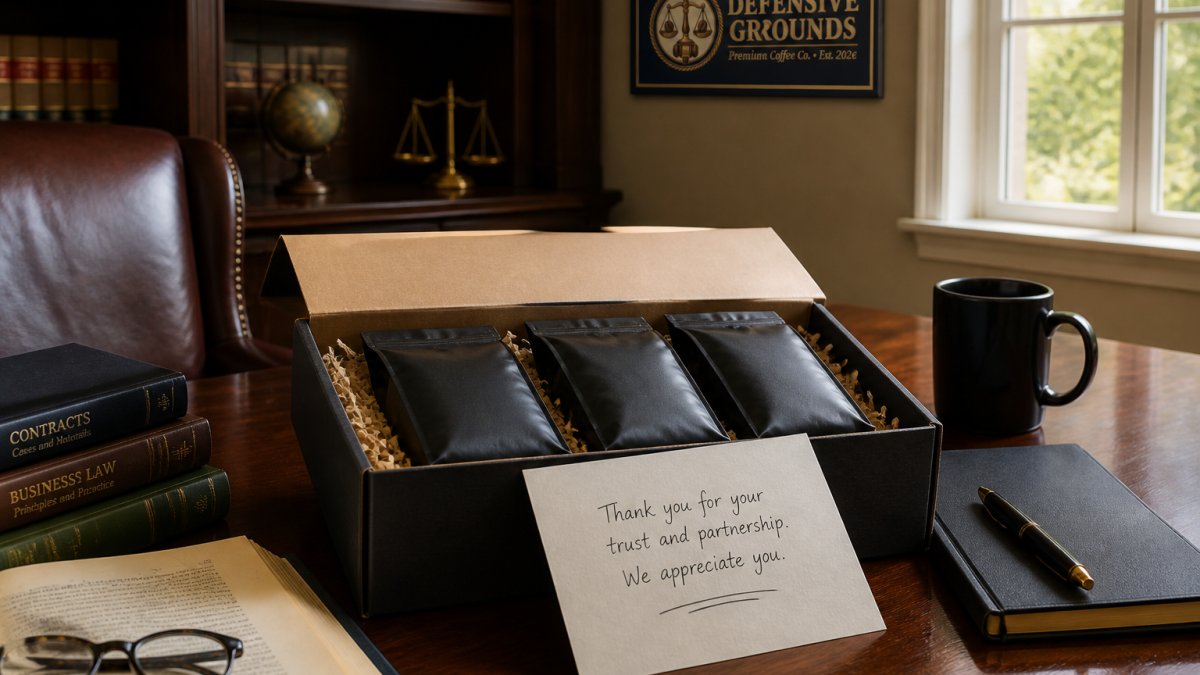
The key is avoiding the "promotional" feel. A bag with a giant logo and thin coffee reads as swag. A small-batch roast with a smart, themed label reads as a gift.
For legal clients, this is where Defensive Grounds fits naturally. We roast specialty-grade coffee to order, so it arrives fresh instead of sitting on a shelf. Our sample packs, like the Best Sellers Sample Pack, let a client try several blends without committing to one.

| Gift Option | Best For | Why It Works |
|---|---|---|
| Sample pack | New clients | Low-risk way to try multiple roasts |
| Single-origin pack | Coffee enthusiasts | Shows you know their taste |
| Flavored coffees | Broad appeal | Approachable, shareable at the office |
| Loose-leaf tea | Non-coffee drinkers | Thoughtful alternative |
Client Gift Message Examples That Sound Genuine
A great gift with a generic card falls flat. The handwritten note is where you win or lose the moment.

Skip "Thanks for your business." Write something only you could write. Here are client gift message examples you can adapt:
"Thanks for trusting us with a tough year. Here's to fewer all-nighters in 2026."
"Congrats on the win last month. This one's for the mornings after the late nights."
"Grateful for your partnership. Enjoy a quiet cup before the next deadline hits."
A digital greeting card works for remote clients, but a handwritten note still carries more weight. Personal message, real detail, no sales pitch.
Watch Out
Never write a message that mentions the gift's price or turns the note into a sales pitch. It instantly kills the goodwill the gift created.
Presentation, Packaging, and Delivery Logistics
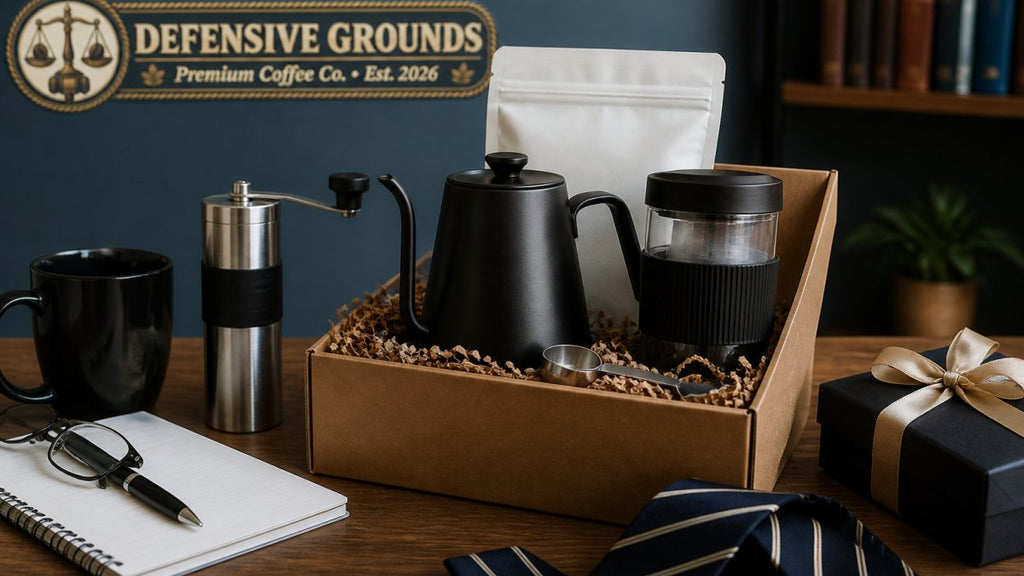
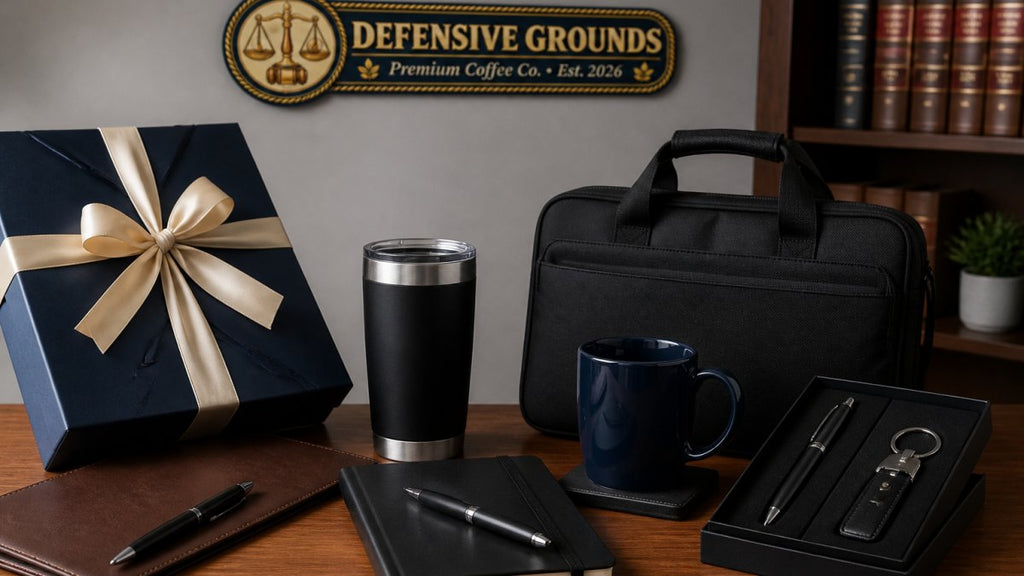
Thoughtful packaging turns a good gift into a memorable one. Presentation signals care before the client even opens the box.
A few things that matter:
- Use clean, elegant wrapping and quality ribbons
- Include the handwritten note on top, not buried
- Confirm delivery timing, especially around holidays
- For remote clients, choose a gifting partner that ships directly
Delivery logistics trip up more firms than gift selection does. Seasonal gifting means everyone ships at once, so plan ahead.
Measuring Gifting Outcomes and Avoiding Common Mistakes
You can't improve gifting if you never track it. Measuring outcomes separates a real program from a yearly guess.
Simple ways to measure:
- Note which clients mention or thank you for a gift
- Track whether gifted accounts renew or refer
- Ask for light feedback on what they liked
Common mistakes to avoid:
- Sending the same gift to everyone
- Ignoring budget and compliance limits
- Forgetting to follow up after delivery
- Choosing a gift that only reflects your brand, not the client
Key Takeaway
A gift program works when it's personal, compliant, well-presented, and tracked. Miss any one of those and the effort fades fast.
Frequently Asked Questions
What makes a client gift thoughtful?
A thoughtful gift shows you understand the recipient's preferences, needs, and the context of your relationship. It avoids generic logo-heavy items and instead focuses on quality, usefulness, and personal relevance. For example, a client who works long hours might appreciate a premium coffee sampler they can actually use during late nights. The gift should feel chosen for them, not pulled from a bulk catalog. Pairing it with a handwritten note that references a specific conversation or milestone elevates it further.
How much should a business spend on a client gift?
There is no universal number, but many companies set tiered budgets based on the client's value and relationship depth. A common approach is $25 to $75 for standard clients, $75 to $150 for key accounts, and higher for major referral sources. Defensive Grounds offers sample packs at $24.99 and loose leaf Earl Grey at $17.00, which fit comfortably within entry-level and mid-tier budgets. Always check your firm's internal gift policy and any applicable compliance rules before spending.
Is coffee a good gift for clients?
Coffee works well for clients because it is practical, consumable, and easy to personalize. It suits a wide range of recipients, especially professionals who work long hours. A specialty-grade, small-batch roast signals quality without being extravagant. You can tailor the choice by roast level, origin, or flavor. For clients who prefer tea, a loose leaf option like Earl Grey provides the same thoughtful, usable quality. The key is selecting something fresh and well-presented rather than a generic branded mug.
What should you write in a client gift note?
Keep it short, specific, and genuine. Reference the reason for the gift, such as a project milestone, holiday, or simply appreciation for their partnership. Avoid sales language or generic phrases like 'thanks for your business.' A good example: 'Thank you for trusting us with the Henderson matter. Your clarity made the process smoother for everyone. Enjoy this small token of our appreciation.' Sign it by hand. The note should sound like you, not like a marketing department wrote it.
Impress clients with thoughtful gifts by focusing on the person, not the logo. It takes a bit more effort, but the payoff in client loyalty is worth it. At Defensive Grounds, we make that easy with specialty-grade coffee roasted to order and shipped fresh, so your gift arrives as good as it looks. Browse our sample packs and let a great cup do the talking. Get started with Defensive Grounds and turn a simple gift into a relationship your clients remember.