French Press Coffee Alternatives for Home Brewing
Last Updated: November 12, 2026
Quick Summary
The best french press alternatives for home brewing are the AeroPress for speed and travel, pour-over for flavor clarity, a drip machine for offices and volume, a moka pot for stovetop espresso-style coffee, and cold brew for make-ahead batches. Each filters more aggressively than a french press, so the cup is cleaner and lighter in body.
- The AeroPress brews in 1-2 minutes and needs no paper filter.
- Pour-over takes three to four minutes of active work per cup.
- A drip machine with a thermal carafe suits offices brewing for a crowd.
- Cold brew steeps coarse grounds in cold water for 12-18 hours.
- Never wash a french press beaker straight from hot to cold water.
Which brew fits your break room?Defensive Grounds roasts specialty-grade coffee to order for legal teams, with free US shipping.
Shop Coffee Now
Table of Contents
- Quick Comparison of French Press Coffee Alternatives
- AeroPress: The Fastest Route Away From Your French Press
- Pour-Over Coffee: Cleaner Cups for Detail-Oriented Brewers
- Drip Coffee Maker: The Hands-Off Option for Busy Offices
- Non-Electric Coffee Makers That Need No Outlet
- How Each Alternative Changes Taste, Body, and Cleanup Compared to a French Press
- Which French Press Coffee Alternative Fits Your Brewing Style
- Stocking Your Break Room With the Right Brewing Setup
- Frequently Asked Questions
Quick Comparison of French Press Coffee Alternatives
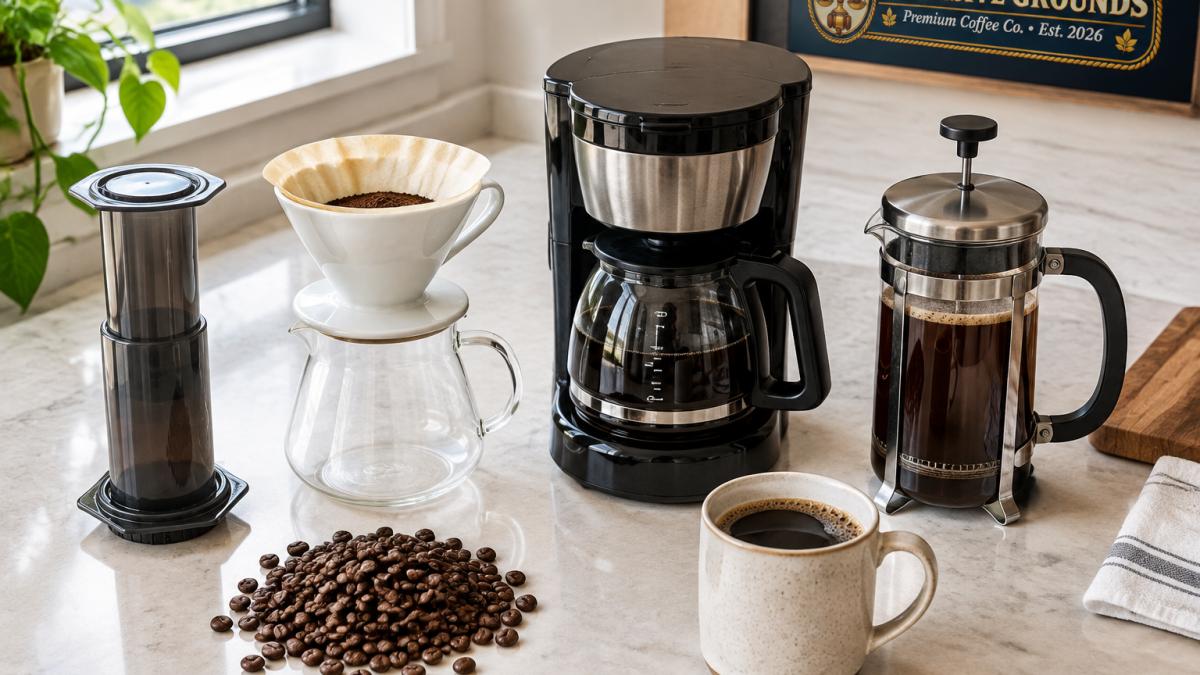
If your French press has earned its place on the counter, you already know why: full-bodied coffee, no paper filters, and a ritual that takes four minutes flat. But the sludge at the bottom of the cup and the daily rinse cycle push plenty of home brewers to look at French press coffee alternatives for home brewing. This guide from Defensive Grounds breaks down five serious contenders, what each one does to taste and body, and who each one actually suits.
Here is the short version before the detail:
| Method | Brew Time | Body | Cleanup | Best For |
|---|---|---|---|---|
| AeroPress | 1-2 min | Medium, rich | Rinse and go | Speed and travel |
| Pour-over | 3-4 min | Light, clean | Filter toss | Flavor clarity |
| Drip machine | Set and forget | Medium | Filter toss | Offices and volume |
| Moka pot | 4-5 min | Heavy, intense | Hand wash | Stovetop espresso-style |
| Cold brew | 12-18 hours | Smooth, low acid | Filter toss | Make-ahead batches |
AeroPress: The Fastest Route Away From Your French Press
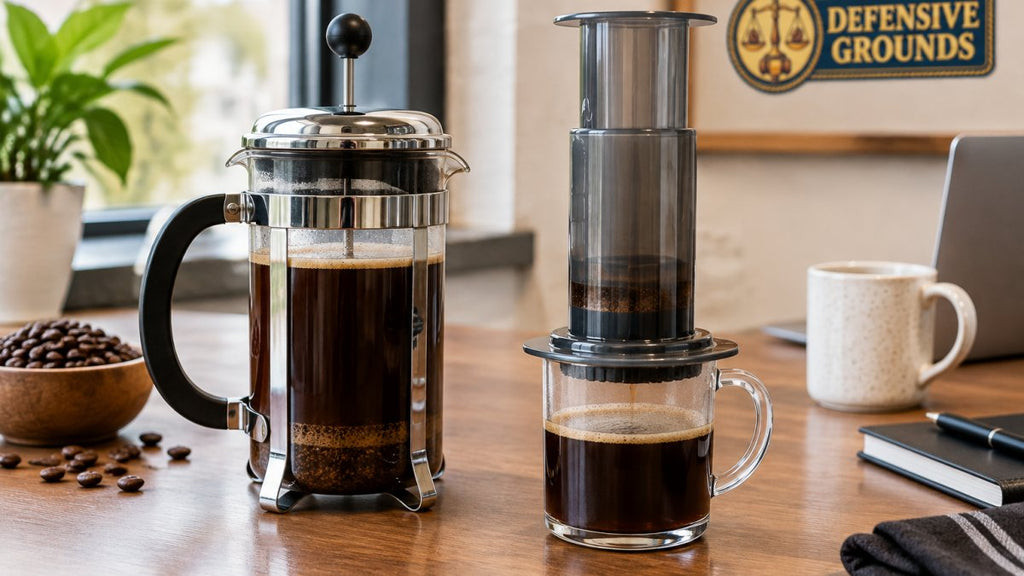
The AeroPress is a handheld press that forces hot water through coffee grounds, producing a concentrated cup somewhere between espresso and drip. It is the closest thing to a French press in spirit: immersion brewing, no paper filter required, and a full-flavored result.
Where it wins is portability. For a desk-side setup or a break room with no room for equipment, it is a practical choice.
The trade-off: one cup at a time. If four people want coffee, you are brewing four times.
Best for: solo brewers and anyone who wants French press character without the grit. Skip if: you regularly brew for a group.
Weighing it directly against your current setup? Our head-to-head on French press vs AeroPress coffee covers the taste and workflow differences in detail.
Pour-Over Coffee: Cleaner Cups for Detail-Oriented Brewers
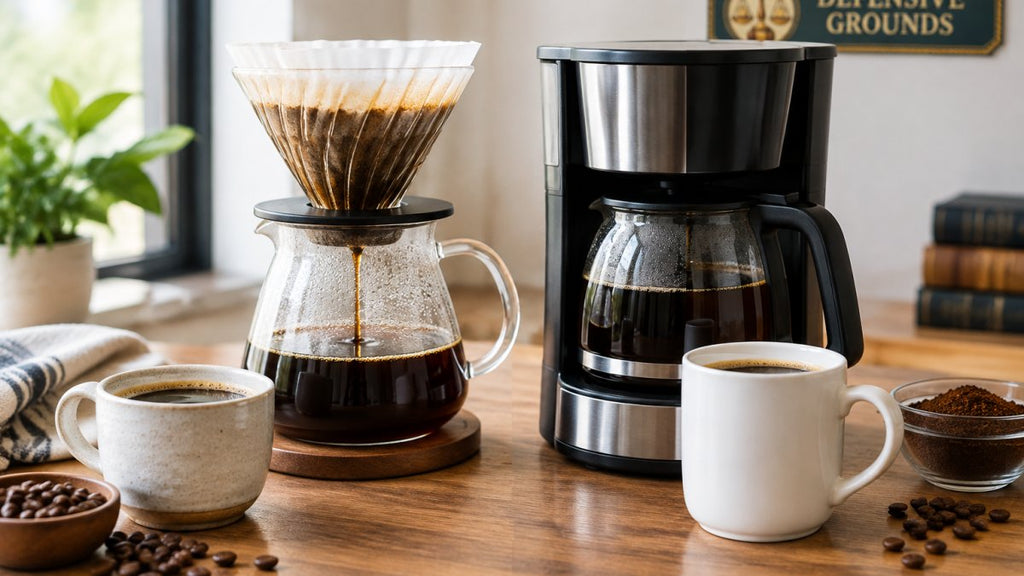
Pour-over coffee is a manual brewing method where hot water is poured over a bed of grounds in a cone filter.
The method rewards attention. Grind size, water temperature, and pour speed all change the outcome, which is either the appeal or the dealbreaker depending on your temperament. Expect three to four minutes of active work per cup, plus a filter to toss.
Best for: flavor-focused brewers who enjoy the process. Skip if: you want coffee in your hand with minimal thought.
If you are still deciding whether the extra effort pays off, read our honest take on whether pour over coffee is worth it, and for a direct taste comparison, see pour over vs drip coffee.
Drip Coffee Maker: The Hands-Off Option for Busy Offices
A drip coffee maker automates brewing: it heats the water, showers it over the grounds, and holds the finished pot until someone pours.
Flavor-wise, expect medium body and decent clarity. One brew cycle fills a carafe, which is useful when several people want coffee at once.
The trade-off is freshness over time. Look for a model with a thermal carafe if your office brews a pot and drinks it slowly.
Best for: offices, meeting rooms, and anyone brewing for a crowd. Skip if: you drink one cup a day and hate dumping the rest.
Non-Electric Coffee Makers That Need No Outlet
Non-electric coffee makers are brewing devices that rely on gravity, pressure, or time rather than a power cord: the moka pot, the cold brew system, and the humble French press itself. They appeal to campers, small kitchens, and anyone who wants a backup that works during a power outage.
The moka pot is the most traditional. It uses stovetop steam pressure to push water through finely ground coffee, producing a strong cup closer to espresso than to drip.
Cold brew is the opposite: coarse grounds steep in cold water for many hours, yielding a concentrate you dilute to taste. A dedicated cold brew maker or a simple jar and filter both work.
Best for: travelers, small spaces, and make-ahead brewers. Skip if: you want a hot cup in under five minutes without planning.
How Each Alternative Changes Taste, Body, and Cleanup Compared to a French Press
The single biggest difference between a French press and its alternatives is filtration. A French press uses a metal mesh that lets oils and fine particles through, which is why the cup feels heavy and coats the tongue. Every alternative here filters more aggressively, and that changes the drink.
The AeroPress is the closest in style to the French press, using immersion brewing. Each method produces a different cup profile.
Cleanup varies by method, with paper-filter methods generally requiring less effort than metal-mesh or stovetop designs.
Watch out: never wash a French press beaker or carafe straight from hot to cold water. Thermal shock cracks glass, and a replacement beaker costs more than you would expect.
Which French Press Coffee Alternative Fits Your Brewing Style
Match the method to your brewing habits. Here is one way to sort the options:
- The beginner: start with an AeroPress. Forgiving, fast, and it produces a good cup even with an imperfect grind.
- The budget-focused: a pour-over cone costs less than any machine and lasts for years. Add a kettle and you are set.
- The flavor obsessive: pour-over, full stop. Control over every variable is the entire appeal.
- The low-maintenance brewer: a drip machine with a thermal carafe. Load it, walk away, drink for hours.
- The planner: cold brew. Make a batch on Sunday, drink well into the week.
One more consideration: the bean matters as much as the device. Defensive Grounds sells specialty-grade coffee, and ships free anywhere in the United States.
Stocking Your Break Room With the Right Brewing Setup
For a legal office, a drip machine with a thermal carafe can keep coffee available through a busy morning. An AeroPress or pour-over cone gives the one or two people who care about their cup a way to brew something better without imposing on everyone else. Many firms run both: a workhorse machine for the room and a small manual setup for the enthusiasts.
The coffee itself deserves the same attention as the equipment. Our office coffee picks walk through which roasts hold up in a high-volume break room and which ones are better saved for a slower morning.
Beyond coffee, a break room can offer options for people who do not drink it. Defensive Grounds carries a full line of loose-leaf teas, including English Breakfast at $17.00, a strong blend of African and Indian teas built to stand up to milk, and Earl Grey at $17.00, Ceylon black tea with bergamot and blue cornflowers. For the late-night crowd, Moroccan Mint at $17.00 is refreshing hot or iced, and Chamomile Ginger at $19.99 is a herbal option.
The right brewing setup keeps a firm running through deadlines, depositions, and the long stretch before trial. Defensive Grounds roasts specialty-grade coffee to order for the people who bill in six-minute increments, ships free anywhere in the United States, and names every bag like a docket entry. Stock your break room with coffee that finally understands the work, and give the team something worth the walk down the hall.
Frequently Asked Questions
What is the easiest French press alternative for home brewing?
A drip coffee maker is the least demanding option: load a filter, add water, and press start. The AeroPress runs a close second because it takes about two minutes and rinses clean under the tap. Both avoid the four-minute steep and the grounds-in-the-sink routine that makes a French press a chore during a busy morning.
Why is an AeroPress often preferred over a French press?
An AeroPress uses a paper microfilter that traps fine particles, so the cup is cleaner and less muddy than French press coffee. It also brews in roughly two minutes instead of four, and the plunger pushes out a compact puck of grounds that goes straight into the trash. The trade-off is a smaller batch, usually one to two cups at a time.
Is pour-over coffee better than French press coffee?
It depends on what you want in the cup. Pour-over coffee tastes brighter and clearer because the paper filter removes oils and sediment. A French press keeps those oils, which produces a heavier body and richer mouthfeel. If you drink coffee for texture, stay with the press; if you want to taste origin notes, pour-over coffee shows them more plainly.
Which brewing method leaves the least sediment in the cup?
Pour-over coffee and drip coffee maker brews leave the least sediment because both rely on paper filters that catch particles down to a fine level. The AeroPress sits close behind thanks to its microfilter. A French press uses a metal mesh that lets fines through, which is why the last sip often turns gritty.
Can you make strong coffee without a French press?
Yes. The AeroPress produces a concentrated, espresso-adjacent cup by using a fine grind and a short, pressurized plunge. A moka pot, which is one of the non-electric coffee makers, also delivers a bold, syrupy brew on a stovetop. For a full pot of strong coffee, use a drip coffee maker with a higher coffee-to-water ratio rather than a longer brew cycle.