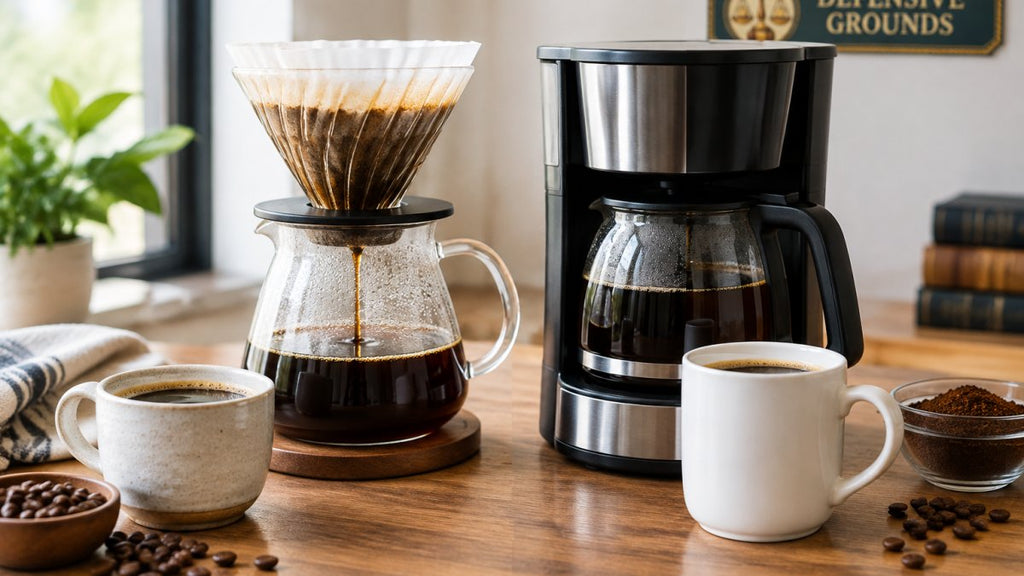
Pour Over vs Drip Coffee Taste: Which Cup Wins
Last Updated: November 8, 2026
Quick Summary
Pour-over coffee produces a cleaner, more defined coffee taste because a paper filter traps fine particles and most oils, while automatic drip delivers a rounder, heavier cup with less effort. Neither method is automatically better, since the brewer matters less than the beans, grind, and water.
- Pour-over's paper filter catches fine particles and much of the coffee oils, so flavors read clean and distinct.
- Drip keeps more oils and sediment, building body but blurring delicate notes.
- Use 20 g of coffee to 320 g of water, about 1:16, for both methods in a fair test.
- Pour-over grind should sit medium-fine, close to table salt, and is the variable that most often decides the cup.
- A drip machine brewing below 195°F under-extracts no matter what goes in the basket.
Which brew method fits your firm?Small-batch coffee roasted to order for legal teams, shipped free nationwide.
Shop Coffee Sample Packs
Table of Contents
- Pour Over vs Drip Coffee Taste: The Short Answer
- How Pour Over and Drip Brewing Methods Work
- Flavor Differences: Clarity, Body, and Mouthfeel
- Pour-Over Coffee Grind Size and Extraction
- How to Make Pour-Over Coffee Taste Better
- Drip Coffee Maker Taste: What Changes the Cup
- Drip Coffee vs. Pour-Over vs. French Press
- Stocking Your Break Room With Coffee That Holds Up
- Frequently Asked Questions
Pour Over vs Drip Coffee Taste: The Short Answer
The pour over vs drip coffee taste debate has a clear winner on flavor clarity and a clear winner on consistency, and they are not the same brewer. Pour-over coffee produces a cleaner, more defined cup because a paper filter traps fine particles and most of the oils, while an automatic drip brewer delivers a rounder, heavier cup with far less effort.
Below, we break down exactly where each method wins, where it falls short, and how to make either one taste like the cup you actually wanted.
How Pour Over and Drip Brewing Methods Work
Both methods do the same job: hot water passes through ground coffee and dissolves flavor compounds. The difference is who controls the water. In pour-over brewing, a person controls it. In automatic brewing, a machine does.
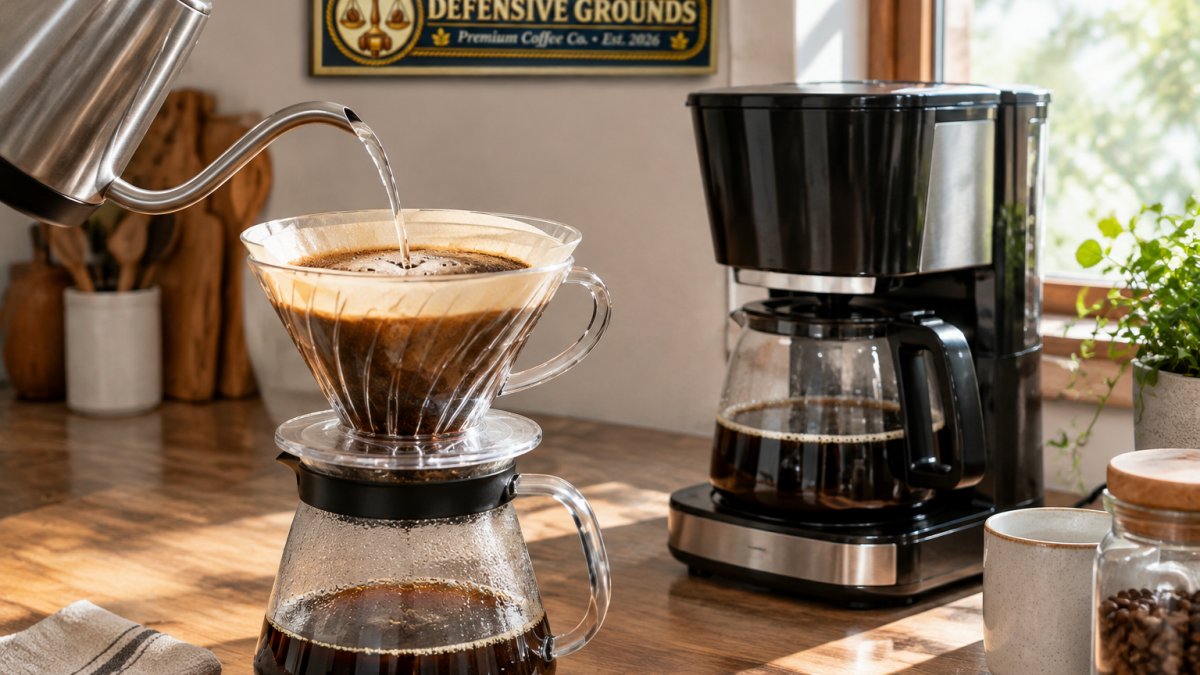
For a full visual walkthrough of every method and how they differ, our Coffee Brewing Methods Chart: The Complete Guide lays them out side by side.
Manual Pour Over: Control in Your Hands
Pour-over coffee is a manual brewing method in which water is poured over a bed of coffee grounds in a cone filter, usually in stages, with the brewer controlling pour speed and timing. That control is the entire appeal. You can slow the pour to stretch extraction or speed it up to pull back bitterness. You can also ruin the cup in about ten seconds by pouring too fast or too coarse.
Automatic Drip: Consistency by Design
An automatic drip brewer sprays or drips water over a basket of grounds at a fixed rate. Set it and walk away. The trade-off is that a cheap machine with a weak heating element brews too cool, and a shower head that wets only the center of the bed leaves dry patches. Good drip brewers solve both problems. Bad ones produce a flat, hollow cup no bean can rescue.
Flavor Differences: Clarity, Body, and Mouthfeel
Flavor clarity is the biggest gap between the two methods. A paper filter in a pour-over cone catches fine particles and much of the coffee oils, so the cup reads clean and the acidity and sweetness of a single origin come through distinctly. Drip coffee keeps more oils and sediment in the cup, which builds body and mouthfeel but blurs delicate notes.
Here is how the two compare on the characteristics that decide whether you enjoy the cup:
| Characteristic | Pour-Over | Automatic Drip |
|---|---|---|
| Clarity | High; flavors separate clearly | Moderate; flavors blend together |
| Body and mouthfeel | Lighter, tea-like | Heavier, rounder |
| Acidity | Bright and pronounced | Softer, less defined |
| Aroma | Sharp and immediate | Muted after a holding plate |
| Consistency | Depends on the brewer's technique | Depends on the machine |
| Best for | Single origin, light roasts | Blends, dark roasts, volume |
Neither column is "better." A medium-roast Brazil Santos with cocoa notes reads smooth and elegant either way, but lighter, fruitier coffees will show more of their character through a paper filter. If you are still deciding whether the effort pays off, our honest take on whether pour over coffee is worth it covers the trade-offs in detail.
How to Run a Fair Side-by-Side Taste Test
Most comparisons fail because the two cups differ in more than the brewer. To isolate the method, hold everything else constant: same beans, same roast date, same grind setting, same water, same coffee-to-water ratio, and same serving temperature. A practical protocol:
- Use 20 g of coffee to 320 g of water (about 1:16) for both methods.
- Grind both batches on the same burr grinder at the setting each method needs, medium-fine for pour-over, medium for drip, because grind is part of the method, not a confound.
- Brew both within 10 minutes of each other and taste at the same temperature, around 140°F to 150°F, since aromatics fade as coffee cools.
Watch out: comparing a pour-over made with a light-roast single origin against a drip pot of dark-roast blend tells you about the beans, not the brewer. Keep the bean and roast level identical for at least one round before drawing conclusions.
How Roast Level and Bean Type Change the Verdict
The clarity advantage of pour-over is largest with light roasts and washed single origins, where delicate floral and fruit notes can be buried by oil and sediment. Medium roasts narrow the gap: chocolate and nut notes survive either method, and the body of drip can make a medium roast feel rounder. Dark roasts and blends often taste better in a drip brewer because the heavier body and softer acidity complement smoky, bittersweet flavors, and the paper filter's oil-stripping can make a dark roast taste thin.
How Freshness and Equipment Skew the Comparison
Fresh beans, a quality burr grinder, and a calibrated brewer matter more than the method itself. Coffee stales within weeks of roast, and stale beans taste flat in both brewers, but a pour-over's clarity makes staleness more obvious, while a drip pot's body can mask it. A blade grinder's uneven particles hurt pour-over more because channeling and stalling amplify the inconsistency.
Pour-Over Coffee Grind Size and Extraction
Pour-over coffee grind size should sit in the medium-fine range, close to table salt, and it is the single variable that most often decides whether the cup tastes right.
A burr grinder matters more here than with drip. Blade grinders produce a mix of dust and boulders, and in a pour-over that mix means part of the bed over-extracts while the rest barely gets touched.
A workable starting recipe for a single cup:
- 20 grams of ground coffee to 320 grams of water, roughly a 1:16 coffee-to-water ratio
- Water temperature between 195°F and 205°F
- A 30-second bloom with about twice the coffee's weight in water
Change one variable at a time. If the cup tastes sour, grind finer. If it tastes bitter or drying, grind coarser.
How to Make Pour-Over Coffee Taste Better
Better pour-over coffee comes down to four fixes, in this order: fresher beans, a better grinder, controlled water temperature, and a slower, more even pour. Most people chasing a better cup skip straight to technique and never address the beans, which is backwards.
Start with freshness. Coffee stales fast once roasted, and no pouring technique rescues a bag that has been open for two months. A Best Sellers Sample Pack at $24.99 lets you try six roasts in 2oz packs before committing to a full bag.

Pouring all the water in at once can flood the bed and produce a thin, uneven cup. Pouring in slow spirals helps keep the water level steady.
Drip Coffee Maker Taste: What Changes the Cup
Drip coffee maker taste is decided by three things: water temperature, saturation of the coffee bed, and how long the pot sits after brewing. A machine that brews below 195°F under-extracts no matter what you put in the basket.
What most guides miss is that the shower head design matters as much as the temperature. A wide spray head wets the whole bed evenly.
Coffee left on a holding plate can keep cooking and turn bitter over time. Transfer to a thermal carafe or drink it fresh.
A Starting Drip Recipe and Ratio
A reliable drip starting point is 1:16 to 1:17 coffee-to-water by weight, for a 12-cup pot, about 60 g of medium-ground coffee to 1,000 g of water. Use a medium grind, similar to sea salt, and preheat the carafe with hot water so the first cup is not cooled by a cold vessel. If your machine has a pre-infusion or bloom setting, use it; it wets the bed before the main brew and improves even extraction.
Troubleshooting Drip Taste
- Sour or sharp: under-extracted. Grind finer in small steps, confirm the brew temperature reaches 195°F-205°F, and check that the shower head wets the whole bed.
- Bitter or drying: over-extracted or stewed. Grind coarser, reduce the brew time if your machine allows, and stop using the holding plate.
- Weak or watery: too coarse a grind, too little coffee, or too much water. Increase dose before changing grind.
Matching Drip Taste to Pour-Over
If you prefer the clarity of pour-over but need drip volume, use the same beans and a medium-fine grind, brew a smaller batch so the bed is not too deep, and transfer immediately to a thermal carafe.
Watch out: changing grind, dose, and water at the same time makes it impossible to know which fix worked. Change one variable per pot and taste before adjusting again.
Drip Coffee vs. Pour-Over vs. French Press
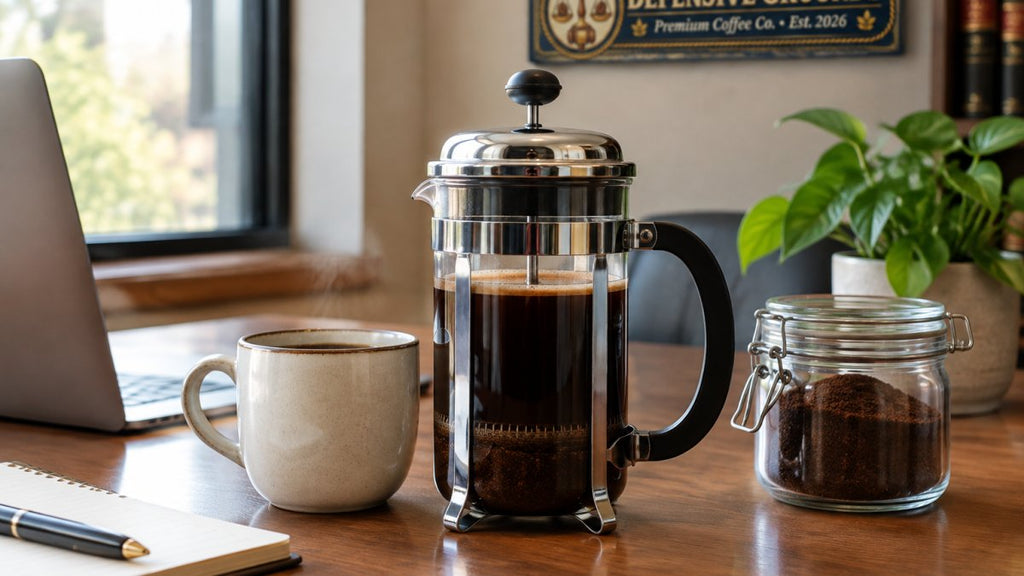
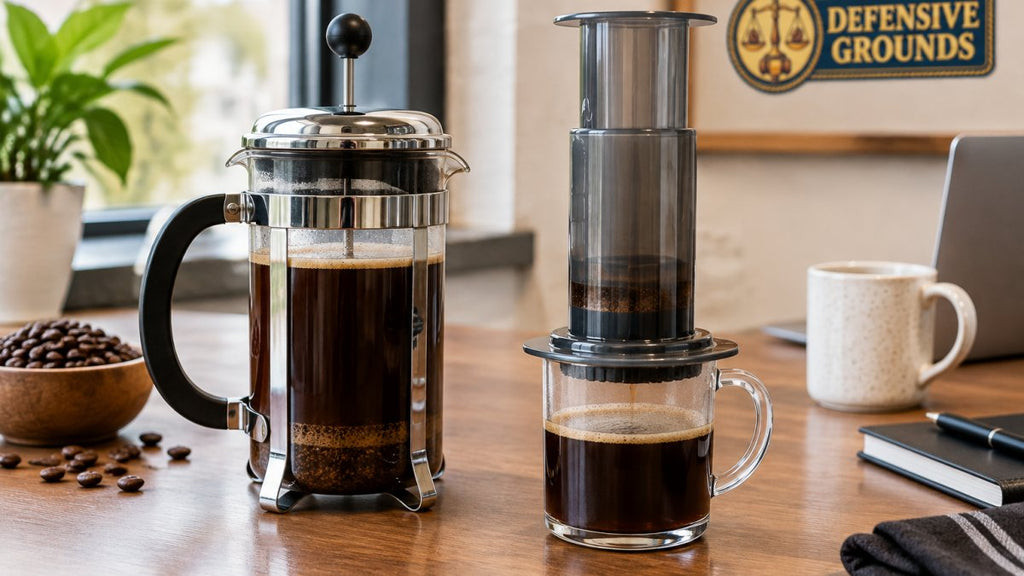
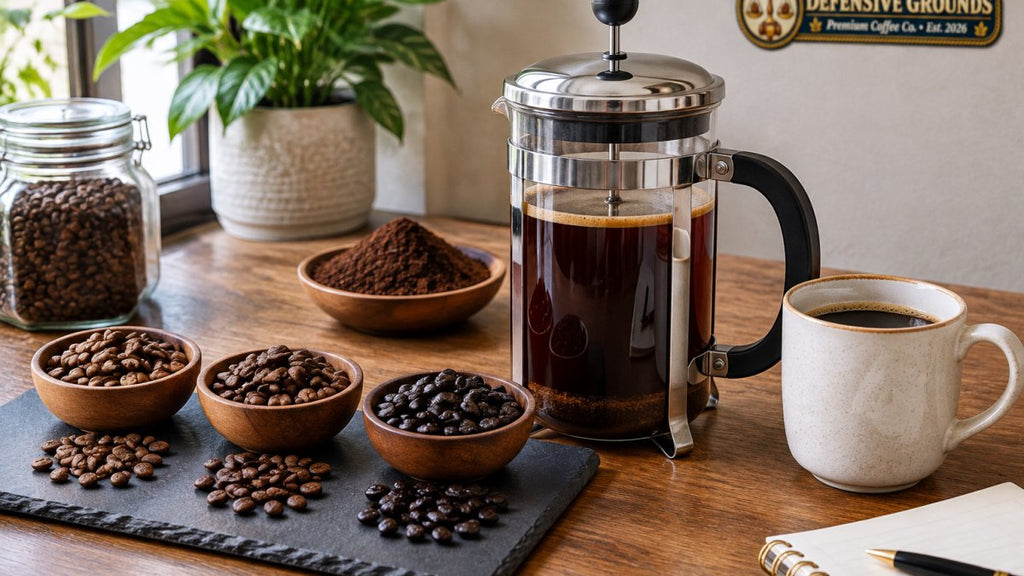
French press sits between the two on clarity and beats both on body. A metal mesh filter lets oils and fine particles through, so the cup is heavy and rich but cloudy, with sediment at the bottom.
Here is where each method lands for a legal team that needs coffee to actually work:
- Pour-over: best flavor clarity, slowest per cup, ideal for one person who cares about the details
- Drip: best for volume and speed, consistent across a whole pot, best for a break room
- French press: best body, moderate effort, awkward to scale past four cups
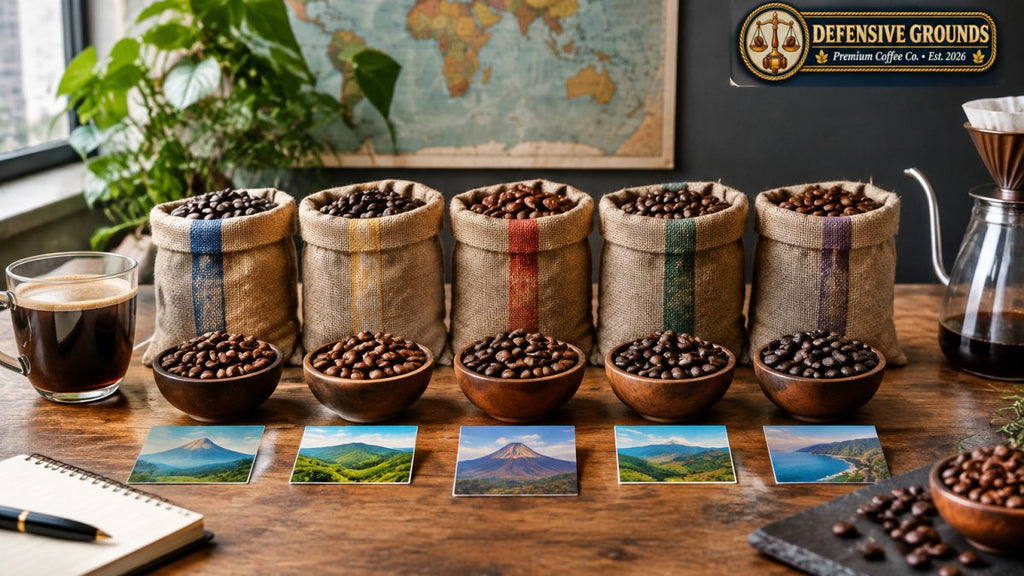
To explore how different origins perform across all three, the Single Origin Favorites Sample Pack at $24.99 includes six 2oz packs from Brazil, Colombia, Costa Rica, Ethiopia, Honduras, and Tanzania.

Stocking Your Break Room With Coffee That Holds Up
Break room coffee fails for one reason: it is bought for cost, not for the eleventh hour of a trial prep.
Buy whole bean and grind just before brewing if your machine allows it. Our Best Alternatives to Office Coffee Break (2026) guide covers how to stock a break room without overbuying.
The real challenge is not choosing between pour-over and drip.
Frequently Asked Questions
Does pour over taste better than drip?
Not automatically. Pour over can produce a cleaner cup with more defined acidity and aroma because the paper filter traps oils and fine particles and you control the pour. A good drip brewer, though, delivers consistent extraction batch after batch. The deciding factor is usually the bean and the grinder, not the method alone. A medium roast like Defensive Grounds' Peru, with its salted caramel and citrus notes, shows well either way when the grind and ratio are dialed in.
What is the main taste difference between pour-over and drip coffee?
Pour over tends to taste lighter and more layered, with clearer acidity and a thinner body. Drip coffee often tastes rounder and heavier, with more oils and sediment reaching the cup. Neither is better; it depends on what you want from the cup. If you like delicate single origin notes, pour over highlights them. If you want a fuller mouthfeel for a long workday, drip delivers that more reliably.
Does grind size affect the taste of pour-over and drip coffee?
Yes, grind size controls extraction. Too fine and the water pulls out bitterness and a hollow, drying finish. Too coarse and you get sourness and a weak, watery cup. Pour over usually wants a medium-fine grind similar to table salt, while drip brewers typically want medium. A burr grinder gives you the even particle size both methods need for consistent results.
Can a drip coffee maker produce coffee that tastes as good as pour-over?
It can, especially with a brewer that hits the right water temperature and saturates the grounds evenly. Fresh beans and a burr grinder matter more than the machine in most comparisons. A drip brewer that keeps water between 195 and 205 degrees Fahrenheit and uses a gold-tone or paper filter will produce a clean, balanced cup. The gap widens when the brewer runs cold or the grind is stale.
Which tastes better: pour-over, drip, or French press?
Each has a distinct profile. Pour over gives clarity and a clean cup. Drip gives balance and body with less effort. French press keeps the most oils and sediment, so it tastes heaviest and richest, with a thicker mouthfeel. For a break room serving a whole team, drip is the practical pick. For a focused single cup, pour over or French press lets you chase a specific flavor.