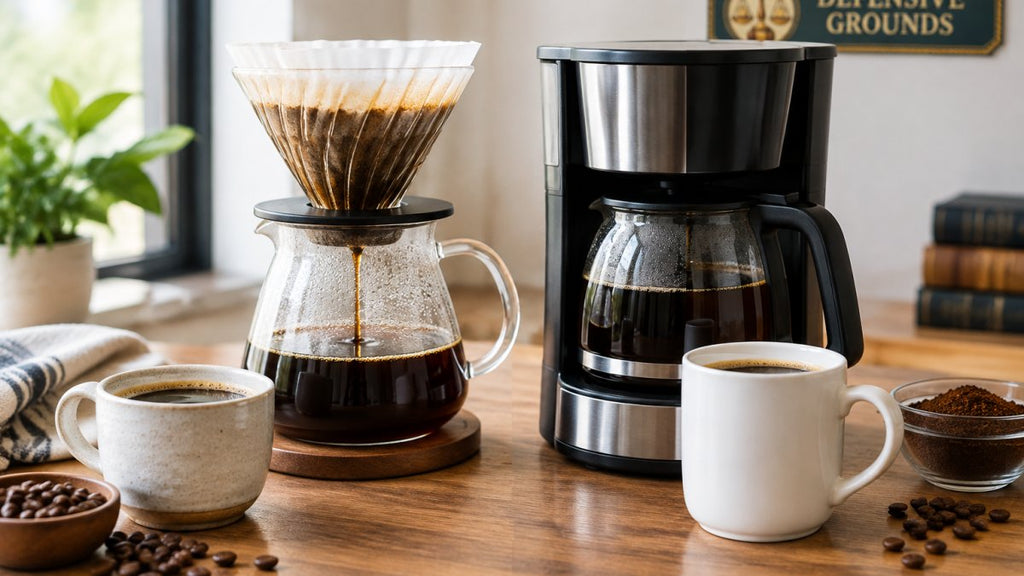
Is Pour Over Coffee Worth It? An Honest Review
Quick Summary
Pour over coffee is worth it if you want control over flavor and enjoy a short daily ritual, because you adjust grind, water temperature and pour rate yourself. It costs about the same per cup as drip coffee, but it takes roughly 4-5 minutes of hands-on time for one cup and needs attention during the brew.
- Pour over costs about $0.03-$0.08 per cup in paper filters, close to drip.
- A typical starter setup runs $35-$90 for a dripper and filters.
- Start with a coffee-to-water ratio near 1:16 and adjust from there.
- Pour over suits one or two cups; drip machines serve larger volumes faster.
- Sour coffee usually means under-extraction; bitter coffee usually means over-extraction.
Table of Contents
- What Pour Over Coffee Is and How It Works
- Flavor Clarity: What You Actually Taste
- Time, Effort and Cost Compared Side by Side
- Pour Over vs Drip Coffee: Where Each One Wins
- Choosing the Best Pour Over Coffee Maker
- Who Should Buy Pour Over and Who Should Skip It
- Start With a Sample Pack Before You Commit
- Frequently Asked Questions
What Pour Over Coffee Is and How It Works
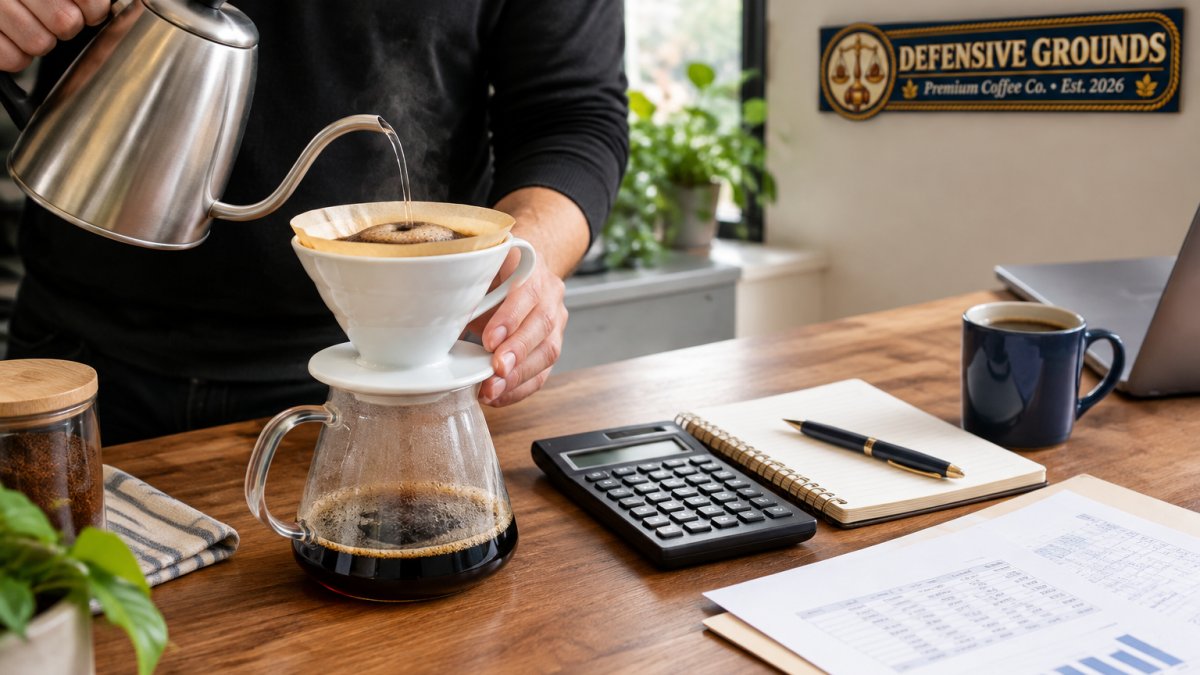
Pour over coffee is a manual brewing method in which hot water is poured over ground coffee sitting in a cone-shaped dripper, usually with a paper filter, and allowed to drain into a cup or carafe below. Coffee beans you grind at home reward a method that rewards precision. The brewer controls every variable directly: water temperature, pour rate, grind size and timing.
A typical pour over follows a simple sequence. You wet the filter, add ground coffee, then pour a small amount of water to "bloom" the grounds, letting trapped gases escape. After that, you pour in slow, steady circles until the target water weight is reached. The coffee drains through in roughly three to four minutes, though the exact time depends on grind size and pour technique.
Because the process is manual, small changes produce noticeable differences in the cup. A finer grind slows the drawdown, while a coarser one speeds it up. Most home brewers start with a coffee-to-water ratio near 1:16, then adjust from there.
Flavor Clarity: What You Actually Taste
Pour over is often described as offering flavor clarity. The paper filter traps most of the oils and fine sediment, which leaves a cup that is lighter in body and easier to read for individual notes. Our Ethiopia Natural, for example, is described with milk chocolate, fruit and caramel notes.
That clarity has a trade-off. Some drinkers find a pour over too thin, especially with darker roasts. A Honduras-style medium-dark roast with caramel and brown sugar notes may taste fuller from a French press, which leaves more oil in the cup.
Pour over also rewards consistency. Because you control every step, you can repeat a cup you like. Drip machines are more forgiving but less adjustable, so flavor varies more from brew to brew.
Time, Effort and Cost Compared Side by Side
Pour over asks for more of your attention than most home methods, and the honest way to judge whether it is worth it is to put real minutes and real dollars next to the alternatives.
| Method | Hands-On Time (1 cup) | Hands-On Time (4 cups) | Starter Equipment | Recurring Cost | Best For |
|---|---|---|---|---|---|
| Pour over | 4-5 min | 12-16 min | $35-$90 | Paper filters, about $0.03-$0.08 per cup | Flavor control, 1-2 cups |
| Automatic drip | Under 1 min | Under 1 min | $25-$60 | Paper filters, about $0.02-$0.05 per cup | Volume and convenience |
| French press | 4-5 min | 6-8 min | $20-$40 | None | Full body, easy cleanup |
| Café purchase | 0 min | 0 min | $0 | $3-$6 per 12-16 oz cup | Speed and consistency |
Coffee itself dominates the ongoing cost: at 18 g per 10 oz cup, a 12 oz bag yields roughly 18-19 cups, so a $16-$20 bag works out to about $0.85-$1.10 per cup. Electricity for heating water is negligible, generally a few cents per brew. A drip machine uses the same coffee and comparable filters, so the recurring difference between pour over and drip is small; the real gap is the upfront equipment and the daily minutes.
That math favors any home method; the question is whether pour over's control is worth its extra minutes versus drip.
For four cups brewed sequentially in a single dripper, hands-on time climbs to 12-16 minutes because you are repeating the pour cycle; a batch brewer or a larger dripper cuts that sharply. Watch out: the common failure is treating pour over as a two-minute task, then rushing the pour and getting a sour, uneven cup because the water level dropped too fast.
Effort beyond time. Pour over also asks for attention during the brew. You cannot walk away mid-pour the way you can with a drip machine, and the first several attempts usually produce inconsistent results while you learn pour rate and grind size. That learning curve is real, but it is also the source of the control that makes pour over worth it for the right drinker.
Pour Over vs Drip Coffee: Where Each One Wins
Pour over wins when flavor and control matter most. Single-origin coffees such as our Colombia or Kenya have distinct notes that suit this method. It also suits one or two cups at a time.
Single Origin Favorites Sample Pack →

Drip coffee wins on volume and convenience. If you are brewing for a full office or household every morning, an automatic machine delivers consistent results with minimal effort. The grind size difference is worth knowing: pour over generally calls for a medium-fine grind, while many drip machines perform best with a medium grind. Using the wrong grind is one of the most common reasons a pour over tastes sour or bitter.
Choosing the Best Pour Over Coffee Maker
Most pour over gear decisions come down to three choices: the dripper, the kettle, and the grinder. Here is the practical version, including what each choice costs and how it changes the cup.
The dripper. A cone dripper is the standard starting point, and the two most common shapes are the V60-style cone and the flat-bottom dripper. A V60-style cone with spiral ribs and a large single hole gives you more control over flow but punishes a sloppy pour; a flat-bottom dripper with a restricted hole is more forgiving and produces a more even extraction for beginners. Ceramic holds heat best but needs preheating; plastic is cheap and durable but retains heat poorly. A 1-cup or 2-cup size covers most households; a 4-cup or larger dripper is worth it only if you regularly brew for several people.
Use the filter size that matches your dripper; a mismatched filter causes channeling and slow drawdown. Bleached and unbleached filters brew slightly differently, but the difference is small compared with grind and pour technique.
Troubleshooting the cup. Sour, thin coffee usually means under-extraction: grind finer, raise water temperature slightly, or slow the pour. Bitter, dry coffee usually means over-extraction: grind coarser, lower the temperature, or speed up the pour. A weak cup with a fast drawdown points to too coarse a grind; a stalled drawdown points to too fine a grind or too much agitation. Inconsistent cups from the same beans usually trace to an inconsistent pour or an inconsistent grind, not the dripper itself.
Upgrading the grinder and kettle later improves consistency more than swapping drippers. Watch out: buying an expensive dripper before a decent grinder is the most common gear mistake, because no dripper can fix uneven grounds.
Who Should Buy Pour Over and Who Should Skip It
Pour over is a good fit for people who enjoy a short ritual each morning and want to taste what they are drinking. It also suits anyone who buys fresh single-origin coffee and wants to get the most from it.
Skip it if you need several cups quickly, if you dislike extra steps, or if you prefer a heavier, richer cup. In those cases, a drip machine or French press will serve you better.
Start With a Sample Pack Before You Commit
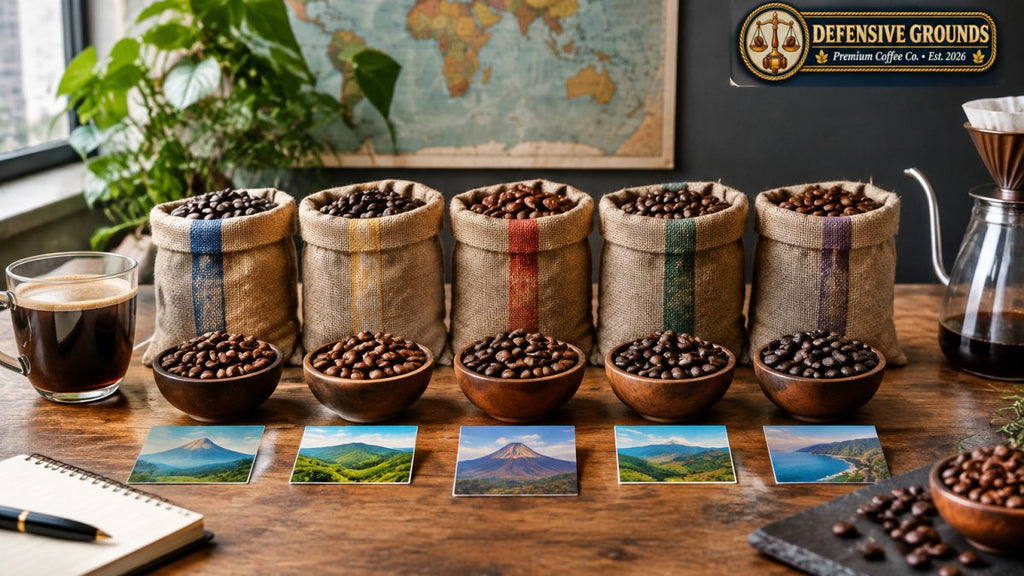
If you are unsure whether pour over suits your routine, try a small batch first. Our Single Origin Favorites Sample Pack includes six 2 oz packs from different growing regions at $24.99, so you can compare flavor profiles before buying a full bag. If you want a range of our most popular roasts, the Best Sellers Sample Pack covers blends and single origins at the same price. For a closer look at one origin with bright, clear flavors, the Kenya coffee is a good place to start.


Frequently Asked Questions
Is pour-over coffee really that much better?
Pour-over is not automatically better than a good drip machine. Brew quality often matters more than the method. Pour-over does give you direct control over water temperature, pour rate and total brew time, which many drinkers find produces a cleaner, more distinct flavor. If your drip machine already tastes balanced and bright, the upgrade may not justify the extra effort. Try a single origin such as our Kenya or Colombia, brewed both ways, and compare.
What is the disadvantage of pour-over coffee?
The main drawback is effort. Pour-over is a more hands-on, manual process, which means more time and more variables to manage. Pour-over also depends heavily on grind size and pour consistency, so inconsistent technique can produce uneven results. It is a poor fit for anyone who needs high volume or quick mornings.
Does pour-over coffee require special equipment?
You need a dripper, a paper or reusable filter, a carafe or mug, a scale, and ideally a gooseneck kettle for controlled pouring. A burr grinder matters more than most people expect, because consistent grind size is one of the biggest factors in flavor clarity.
Which tastes better, French press or pour-over coffee?
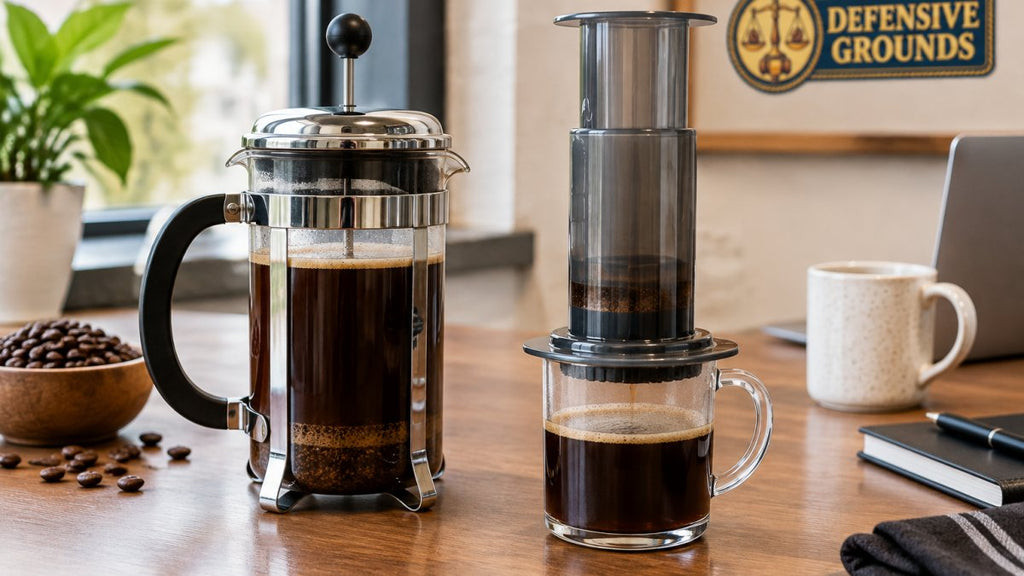
French press produces a heavier body and more oils because the grounds steep in water with no paper filter to trap them. Pour-over produces a cleaner, brighter cup with clearer tasting notes. Neither is objectively better; it depends on whether you want richness or clarity. Sampling a few single origins in both styles is the simplest way to decide.