Is Roasted to Order Coffee Worth It?
Table of Contents
- What Roasted to Order Coffee Actually Means
- Fresh Roasted Coffee vs Supermarket Coffee: The Real Difference
- How Long Coffee Beans Stay Fresh After Roasting
- Benefits of Freshly Roasted Coffee for Flavor and Aroma
- How to Tell If Coffee Beans Are High Quality
- Cost Per Cup: Breaking Down the Real Expense
- Is Roasted to Order Coffee Worth the Investment?
- Frequently Asked Questions
Last Updated: October 11, 2026
What Roasted to Order Coffee Actually Means
When you order roasted to order coffee, the beans are roasted specifically for your order and shipped within days, not months after roasting like supermarket coffee. At Defensive Grounds, we roast every bag fresh, so it arrives at peak flavor rather than past its prime.
Once roasted, coffee begins losing flavor compounds immediately through oxidation and degassing. Roasted to order coffee minimizes this window by getting to you while those compounds are still vibrant.
This approach requires roasting smaller batches frequently instead of bulk roasting and storing inventory. You wait a few days instead of grabbing a bag off a shelf, but the freshness gain justifies that small delay.
Fresh Roasted Coffee vs Supermarket Coffee: The Real Difference
Freshly roasted beans have volatile aromatic compounds and oils that create complexity, sweetness, and texture. Supermarket coffee has often lost these qualities through oxidation during months of storage.
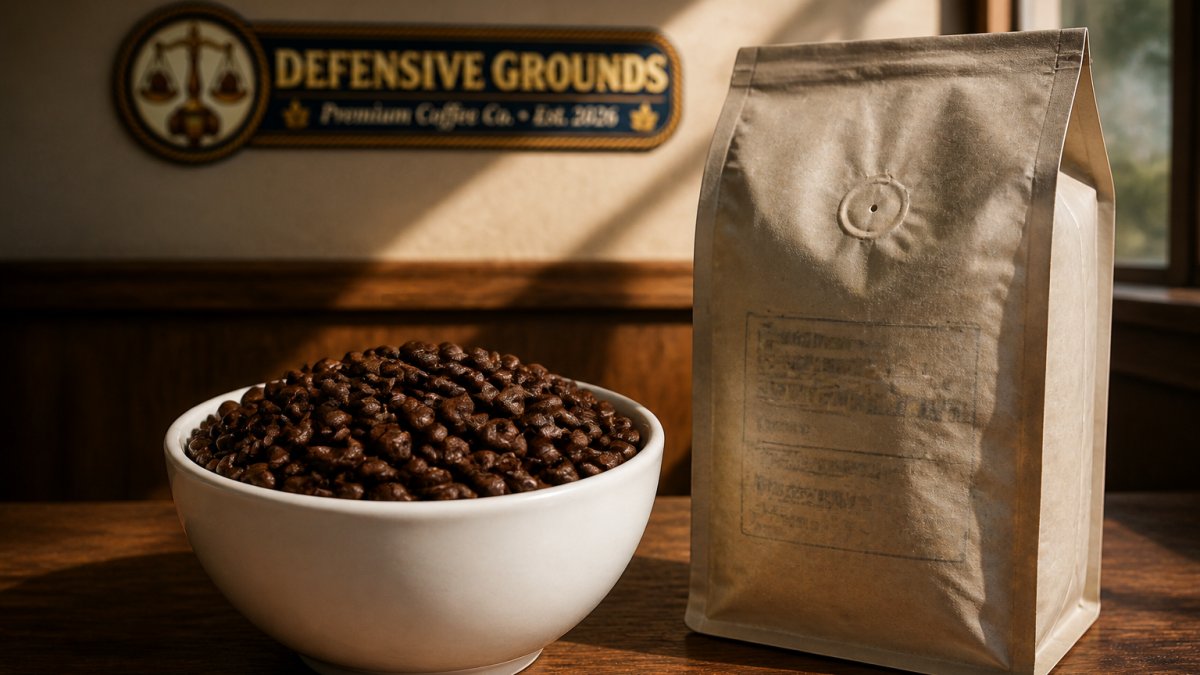
Fresh roasted coffee reveals distinct flavor notes, citrus, chocolate, caramel, or floral undertones, depending on origin and roast level. Supermarket coffee tastes flat, bitter, or muted because delicate flavor compounds have degraded, with thinner body and weak aroma.
Aroma is the first signal of freshness. Fresh roasted beans release rich, complex scents when ground; older beans smell stale or generic.
Pro Tip
Check the roast date on any coffee bag you buy. If there's no date printed, that's a red flag. Coffee roasted more than 30 days ago has already lost significant flavor potential.
How Long Coffee Beans Stay Fresh After Roasting
Coffee beans reach their flavor peak 5 to 10 days after roasting, once degassing (the release of trapped carbon dioxide) is complete. After that peak window, flavor gradually declines.
Properly stored whole beans stay fresh for 2 to 4 weeks after roasting; ground coffee degrades faster and should be used within 1 to 2 weeks.
Store beans in an airtight container away from heat, light, and moisture. A cool, dark pantry works best; avoid the freezer and refrigerator.
Roasted to order coffee arrives during that optimal flavor window, typically 7 to 14 days after roasting. You're brewing it while the flavor compounds are still present. Supermarket coffee, by contrast, may have been roasted weeks or months before you purchase it, meaning you're starting from a degraded baseline.
Benefits of Freshly Roasted Coffee for Flavor and Aroma
Freshly roasted coffee delivers flavor complexity that older coffee cannot match. Single-origin coffees reveal their character most clearly when fresh: Brazil Santos shows cocoa and smoothness, Ethiopia Natural expresses fruity and caramel notes, and Peru brings salted caramel and citrus brightness.

The aroma of fresh roasted coffee is one of its greatest pleasures. When you open a bag, the smell is intense and layered, signaling active flavor compounds ready to extract into your cup.
Fresh roasted beans taste naturally sweet because roasting sugars haven't oxidized away. Older beans taste more bitter or harsh by comparison.
Fresh roasted coffee feels richer and fuller on the palate because coffee oils that create mouthfeel haven't degraded. French press and espresso benefit most since they extract oils directly into your cup.
Key Takeaway
The flavor difference between coffee roasted 2 weeks ago and coffee roasted 3 months ago is significant enough that many people notice it immediately in their first cup.
How to Tell If Coffee Beans Are High Quality
Quality coffee starts with sourcing transparency. Look for single-origin coffees with named regions, altitudes, and processing methods, not vague labels like "imported from South America."
But sourcing alone doesn't guarantee quality. When evaluating a roasted-to-order roaster, use these practical checks:
Roast Date and Degassing Window High-quality roasters print a roast date on the bag. Beans should arrive 5 to 10 days post-roast (ideal flavor peak after degassing). Ask before ordering: "When will these beans be roasted and shipped?" Reputable roasted-to-order operations roast within 1 to 2 days of your order and ship within 3 to 5 business days.
Packaging and Freshness Indicators Quality roasters use bags with one-way valves that let CO₂ escape without letting oxygen in. When you open a bag, listen for a slight hiss, a sign the beans are fresh. Opaque bags with a valve are standard for specialty roasters; clear bags expose beans to light and degrade flavor.
Roast Level Intentionality A quality roaster explains why they chose a specific roast level for each coffee. For example: "We roast this Ethiopia Natural to a light-medium to preserve fruity and floral notes" or "This Brazil is roasted to a full city to emphasize body and chocolate." If a roaster offers the same coffee in multiple roast levels without explanation or roasts everything dark or light regardless of origin, they're not optimizing for the bean's potential.

Flavor Profile Specificity High-quality roasters describe flavor notes specifically ("citrus, jasmine, and honey" not "fruity and floral") and include brewing recommendations because they've tested the coffee multiple ways.
Sourcing and Pricing Alignment
Direct Communication Before ordering, ask: "What's your roast-to-ship timeline?" "Can you confirm the roast date before I order?" Roasters who respond promptly and in detail prioritize freshness and intentional sourcing.
Pro Tip
Request a sample pack or small quantity first. Taste the coffee and evaluate it against your expectations. Does it match the flavor profile? Is the aroma intense? Does it taste fresh or flat? Your palate is the final judge of quality, and no amount of marketing can override a disappointing cup.
Cost Per Cup: Breaking Down the Real Expense
Roasted to order coffee costs more upfront than supermarket coffee, typically around $24.99 per bag. A standard bag yields roughly 16 to 20 cups depending on brew strength and method.
At $24.99 per bag, you're paying approximately $1.25 to $1.56 per cup.
Cost per cup ignores value. Fresh roasted coffee's superior flavor, aroma, and experience justify the premium for most coffee drinkers.
Volume changes the equation. If you drink 2 cups daily, the annual difference between supermarket and roasted to order coffee is roughly $365 to $550. For a law firm buying coffee for a break room, that's meaningful but manageable. For individual consumption, it's a modest premium for significantly better quality.
| Coffee Type | Bag Price | Cups Per Bag | Cost Per Cup | Annual Cost (2 cups/day) |
|---|---|---|---|---|
| Supermarket | $10 | 16 | $0.63 | $459 |
| Roasted to Order | $24.99 | 18 | $1.39 | $1,014 |
The premium reflects what you're actually getting: beans roasted within days, sourced intentionally, and delivered fresh. You're paying for quality and freshness, not just caffeine.
Is Roasted to Order Coffee Worth the Investment?
Whether roasted to order coffee is worth it depends on your priorities: flavor quality, convenience, time investment, and total cost. The answer differs significantly depending on whether you're comparing it to supermarket coffee, home roasting, or a combination of both.
Roasted to Order vs. Supermarket Coffee Roasted to order coffee costs roughly $1.25 to $1.56 per cup. For someone drinking two cups daily, that's roughly $365 to $550 per year more than supermarket coffee. But this comparison ignores value: the flavor, aroma, and freshness of roasted-to-order coffee are noticeably superior. If you appreciate good coffee, the premium is modest for a significantly better experience. For offices and break rooms, roasted to order coffee signals care and quality to employees and clients, improving morale and creating a moment of quality in a demanding day.
Roasted to Order vs. Home Roasting Roasted to order coffee eliminates this effort: you receive consistently high-quality beans without equipment investment or time spent learning roasting technique. For most people, the convenience and consistency of roasted to order outweigh the per-cup savings of home roasting.
Shipping, Subscriptions, and Delivery Trade-offs Roasted to order coffee requires planning ahead. Typical roast-to-ship timelines are 3 to 7 business days, meaning you can't grab a bag off a shelf when you run out. This is a real inconvenience if you forget to reorder. Many roasted-to-order operations offer subscriptions (weekly, biweekly, or monthly deliveries) to solve this problem. Subscriptions ensure fresh beans arrive on schedule and often include a small discount (5 to 10%). Shipping costs vary. If you order frequently or in larger quantities, shipping becomes negligible. If you order small quantities sporadically, shipping costs can add 15 to 25% to your per-cup expense.
The subscription model works best if you drink coffee consistently and can predict your consumption. A typical subscription delivers 1 to 2 bags every 2 to 4 weeks, which suits regular drinkers. If your consumption is irregular or you like variety, one-off orders may be better despite higher per-unit shipping costs.
Freshness Across Brewing Methods The freshness advantage of roasted-to-order coffee is not equally noticeable across all brewing methods. Espresso and pour-over are most sensitive to freshness because they extract quickly and rely on precise water contact with the beans. A stale espresso shot tastes thin and bitter; a stale pour-over tastes flat and one-dimensional. French press and automatic drip are more forgiving because they extract longer and mask some of the flavor loss from age. If you brew espresso or pour-over regularly, roasted-to-order coffee's freshness advantage is significant and worth the premium. If you primarily use automatic drip or French press, the difference is noticeable but less dramatic.
The Real Value Proposition Roasted to order coffee is worth the investment if you meet any of these criteria:
- You drink coffee regularly (daily or most days) and care about taste
- You brew with espresso or pour-over methods where freshness matters most
- You want consistency without the time and equipment investment of home roasting
- You value knowing your coffee was roasted specifically for you, not months before purchase
- You appreciate the sourcing transparency and intentionality that specialty roasters provide
It may not be worth it if:
- You drink coffee primarily for caffeine and don't notice taste differences
- You have an irregular consumption pattern and struggle to use beans before they age
- You're unwilling to plan ahead or manage a subscription
- You already home roast and are satisfied with your results
- Your budget is extremely tight and every dollar matters
Key Takeaway
For most regular coffee drinkers, roasted-to-order coffee delivers noticeably better flavor and freshness. The convenience of not roasting at home and the consistency of professional roasting make it worth the cost. Start with a single-bag order or sample pack to experience the difference, then decide whether the premium fits your routine and budget.
Frequently Asked Questions
How long after roasting is coffee at its best?
Coffee reaches peak flavor 3-7 days after roasting, once it has degassed. Roasted to order coffee arrives within this window, ensuring you brew at the ideal time. Supermarket coffee, often roasted weeks or months prior, has already passed its prime freshness window before you purchase it.

Does freshly roasted coffee taste better than supermarket coffee?
Yes. Freshly roasted coffee retains more complex flavors, brighter acidity, and fuller aroma than pre-roasted beans. Supermarket coffee loses sweetness, body, and aromatic compounds over time due to oxidation and staling. The difference is most noticeable in pour-over, French press, and espresso brewing methods where flavor clarity matters.
What counts as freshly roasted coffee?
Freshly roasted coffee is roasted within 1-2 weeks of purchase, ideally 3-7 days before brewing. Roasted to order coffee is roasted after you order it, shipped quickly, and arrives within days. This contrasts with supermarket coffee, which sits on shelves for months, losing freshness, flavor complexity, and aromatic oils.
Is roasted-to-order coffee worth the extra cost?
For specialty coffee drinkers and legal professionals who value quality and consistency, yes. Roasted to order coffee delivers superior flavor, customizable roast levels, and guaranteed freshness. The cost difference per cup is modest when calculated over time, especially for high-volume users. For casual coffee drinkers, the value depends on whether flavor quality justifies the premium.