Premium Coffee Subscription for Small Teams: 2026 Guide
Table of Contents
- Why a Premium Coffee Subscription for Small Teams Beats Grocery Store Coffee
- What to Look for in a Coffee Subscription for Businesses
- Small-Batch Coffee Subscription Options That Fit a Legal Office
- How to Plan Office Coffee Subscription Volume Without Overbuying
- Coffee Delivery for Offices: Scheduling and Reliability
- Per-Cup and Per-Employee Cost Analysis for Small Teams
- Building Team Buy-In: Inclusive Selection and Office Administration
- Conclusion
- Frequently Asked Questions
Last Updated: October 19, 2026
Why a Premium Coffee Subscription for Small Teams Beats Grocery Store Coffee
Freshness You Can Taste: Roasted to Order vs. Warehouse Shelves
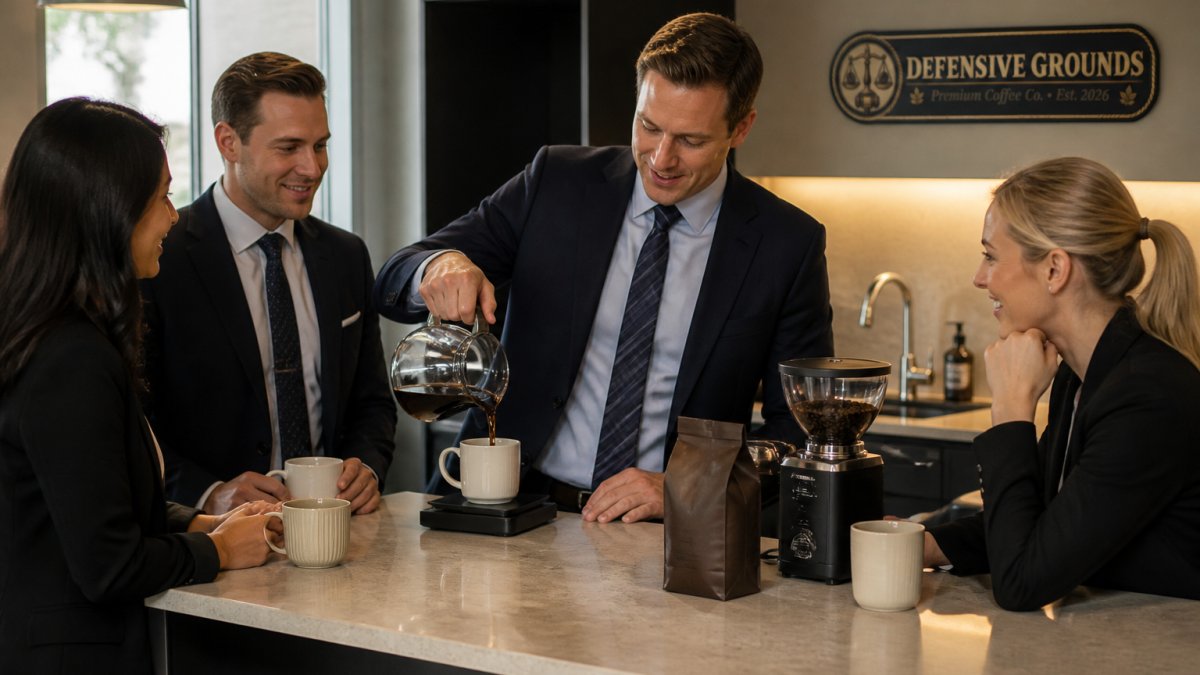
Freshness is the single biggest difference between subscription and supermarket coffee. Bagged coffee on a shelf may sit for weeks or months; coffee roasted to order ships within days, while flavor compounds are still intact.
Many roasters print the roast date on the bag. Check it before you commit to any vendor. A bag with no date is a red flag.
Pro Tip
Ask any prospective roaster for their typical roast-to-ship window before you sign. A vendor that cannot answer that question in specific terms is probably warehousing inventory rather than roasting to order.
What to Look for in a Coffee Subscription for Businesses
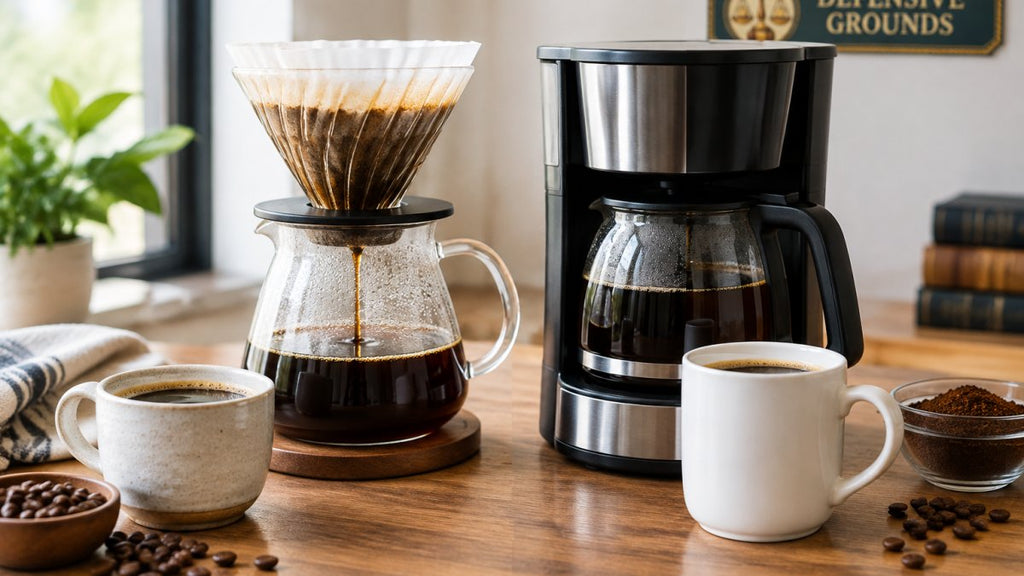
A coffee subscription for businesses has to match three things to your office: bag size, grind, and roast level. Get them right and it runs itself. But equipment is where most teams get stuck, because a law office rarely has one brewing setup, it has two or three, and the subscription must serve all of them.
Bag Size, Grind, and Roast Level: Matching the Subscription to Your Brew Setup
Start with your equipment. A drip brewer, an espresso machine, a single-serve machine, and a cold brew setup each want different things:
- Whole bean for any grinder-based setup, because ground coffee stales faster once the package is open
- Ground coffee matched to your brew method, since grind size controls extraction
- Medium roast as a safe default for a mixed office, since it pleases most palates
Bag size matters just as much. A small team of six to ten people will not finish a large commercial bag before it goes stale. Look for 12-ounce bags or smaller sample formats you can rotate.
[Our House Blend is a medium roast](/products/house-blend) with nutty, sweet chocolate notes and a clean finish, which is why it works as a default for a mixed office. Teams that want variety should start with our Best Sellers Sample Pack, six 2-ounce packs spanning dark, medium, and single-origin options.

Office Brewing Equipment Compatibility: What Each Setup Actually Needs
The table below is the quick reference, but the notes under it are what save an office manager from a bad first order.
| Brew Setup | Grind | Roast Level | Best For |
|---|---|---|---|
| Drip brewer | Medium grind | Medium | General office use |
| Espresso machine | Fine grind | Dark | Associates who want a strong shot |
| Cold brew | Coarse grind | Dark French roast | Summer months, late nights |
| Single-serve capsules | Pre-ground | Medium | No-grinder offices |
Drip brewers are the workhorse of most small offices and the most forgiving.
Espresso machines demand a fine grind and a roast with enough body to cut through milk.
Single-serve capsule machines are the lowest-effort option for an office with no grinder. The trade-off is cost per cup and limited roast selection.
Shared grinders deserve a warning.
Pro Tip
Before you order, walk the break room and write down every brewing device by brand and model. A subscription that fits the equipment you already own is worth more than a slightly better roast that forces a $200 grinder purchase.
Watch Out
Do not assume a single grind setting serves every machine. If your office runs both a drip brewer and an espresso machine, order whole bean and grind per brew, or split the subscription into two grind options. One grind for both setups guarantees mediocre coffee in at least one of them.
Small-Batch Coffee Subscription Options That Fit a Legal Office
Here is how our core options break down for a practice of five to fifteen people:
1. Best Sellers Sample Pack ($24.99), Six 2-ounce packs covering 6Bean Blend, Cowboy Blend, Breakfast Blend, Peru, Mexico, and Bali. The right starting point for a firm new to specialty coffee that wants to test preferences before committing.
2. Single Origin Favorites Sample Pack ($24.99), Six 2-ounce packs from Brazil, Colombia, Costa Rica, Ethiopia, Honduras, and Tanzania.
3. Breakfast Blend ($24.99), A medium roast, smooth South American blend.
4. Cold Brew Coffee ($24.99), A dark French roast with very coarse grounds, blended specifically for cold brew.
5. Single Serve Coffee Capsules, Available in a 12-pack for $19.99 or 60-pack for $64.99.


Watch Out
Do not buy a 60-pack of capsules for a three-person office unless you have checked the roast date. Capsules sealed with no oxygen inside hold up better than open bags, but they still have a shelf life, and a bulk purchase that outlasts your consumption rate defeats the point.
How to Plan Office Coffee Subscription Volume Without Overbuying
Plan volume by the cup, not the bag. A 12-ounce bag yields roughly 16 to 20 cups, so a team of ten drinking three cups each per workday needs about two bags a week, or eight to nine a month.
Run the math for your own office before you order:
- Count daily coffee drinkers, not total headcount
- Estimate cups per person per day, usually two to three
- Multiply by workdays per month
- Divide by cups per bag to get bags per month
- Round down, then add one bag as a buffer
That last step matters. Running out mid-week is worse than one spare bag on the shelf.
Key Takeaway
The most common overbuying mistake is ordering for headcount instead of for actual consumption. Half a firm's staff may drink tea or bring coffee from home. Count cups, not people.
Coffee Delivery for Offices: Scheduling and Reliability
Coffee delivery for offices works best on a fixed recurring schedule tied to your consumption rate, not a one-off order whenever someone notices the shelf is empty.
60 Pack Single Serve Coffee Capsules →
Set the cadence from your monthly bag count: a firm going through eight bags a month should schedule a delivery every two weeks with four bags per shipment, keeping the shelf stocked without turning the mailroom into a warehouse.
Reliability questions worth asking any vendor:
- Is the roast date printed on every bag
- What is the typical order-to-delivery window
- Is shipping included or billed separately
We ship free anywhere in the United States, removing one line from the office manager's expense reconciliation, a small thing that saves real administrative friction over a year.
Per-Cup and Per-Employee Cost Analysis for Small Teams
Per-cup cost is the only number that matters when comparing a subscription against grocery store coffee. A 12-ounce bag at $24.99 yielding roughly 18 cups works out to about $1.39 per cup, against several dollars at a coffee shop, the subscription pays for itself on the first Monday.
Here is a simple framework for a ten-person office:
| Metric | Calculation | Result |
|---|---|---|
| Daily cups | 10 people × 2.5 cups | 25 cups |
| Monthly cups | 25 cups × 21 workdays | 525 cups |
| Bags needed | 525 ÷ 18 cups per bag | ~29 bags |
| Monthly cost | 29 bags × $24.99 | ~$725 |
| Per-employee cost | $725 ÷ 10 people | ~$72.50 |
That per-employee figure is the number to put in front of a managing partner, a defensible line item against reimbursed coffee shop runs, and easy to explain in a budget meeting.
Pro Tip
If the per-employee number looks high, check your cups-per-bag assumption first. Many offices brew weaker than they think, which stretches a bag further. Measure one week of actual consumption before you build the budget.
Building Team Buy-In: Inclusive Selection and Office Administration
Team buy-in comes from giving people a say in the selection, not from announcing a decision from above. A short tasting with sample packs settles most debates in an afternoon and costs less than a coffee shop run for the whole office. The other half is the administrative machinery that keeps the subscription running without chasing invoices or fielding complaints about decaf.
Running a Blind Tasting That Actually Settles the Question
Run it as a simple blind tasting. Label cups by number, not by name, and have everyone rank their top two. The pack that wins becomes the house coffee; the runner-up becomes the second option. Our Flavored Coffees Sample Pack is useful here if part of the team wants flavored options alongside the traditional roasts.
A few mechanics make the tasting more useful:
- Brew every sample the same way, on the same equipment, at the same strength
- Provide a dump cup and water so people can reset their palate
- Ask for a top two ranking rather than a single favorite, so you get a backup option
Inclusive Selection: Roast, Decaf, and Dietary Preferences
A subscription that only serves the majority is not inclusive, and in a small office the minority is loud enough to matter. Settle these before the first recurring order:
- Decaf. Someone on your team drinks it, and a subscription that ignores that is not inclusive. Stock a small amount alongside the regular rotation rather than making decaf drinkers ask.
- Roast range. A medium house coffee plus one darker option covers most preferences. A single light roast as the only choice will alienate the half of the office that wants a traditional cup.
- Flavored and single-origin options. Rotating a single-origin or flavored bag in as a second option gives the team variety without changing the house coffee.
Business Purchasing and Administration: The Part Nobody Covers
Consumer subscription roundups stop at the bag price.
Tax documentation. Coffee is generally a business expense, but documentation must be clean.
Delivery coordination. Coffee has to land somewhere a person will actually receive it.
Change management. Decide in advance how the team requests a change in roast, blend, or quantity, and who approves it.
Holiday and closure handling. Offices close for holidays, and a subscription that keeps shipping into an empty office wastes coffee and money.
Pro Tip
Ask for a sample invoice before you commit. If the invoice does not show the roast date, the shipment contents, and a firm-level billing address, you will be rebuilding that record in a spreadsheet every month.
Key Takeaway
The subscription decision is a purchasing decision as much as a coffee decision. A vendor that handles invoicing, recurring billing, and delivery coordination cleanly saves more administrative time over a year than a slightly better roast saves in the cup.
Conclusion
The hardest part of running an office coffee program is not choosing a roast. It is building a system that stays stocked, stays fresh, and stays within budget without someone babysitting it every week. That is the problem Defensive Grounds was built to solve, with specialty-grade coffee roasted to order, free shipping anywhere in the United States, and legal-themed branding that gives the break room personality.
Frequently Asked Questions
What is the best coffee subscription for a small office?
The best option for a small office balances freshness, bag size, and brewing compatibility. Look for a small-batch coffee subscription that roasts to order, offers whole bean and ground options, and provides flexible delivery frequency. Defensive Grounds offers 12- and 60-count single-serve capsules, 12 oz whole bean bags, and sample packs, so a team of 5 to 15 can start small and scale without committing to bulk inventory.
How much coffee should a small team order each month?
Estimate one 12 oz bag per two to three people per week, depending on brew strength and cup size. For a team of eight drinking two cups daily, plan roughly 4 to 6 bags monthly. A small-batch coffee subscription with adjustable delivery lets you start conservatively and increase volume after the first month. Sample packs are a low-risk way to test consumption before locking in a recurring order.
How often should an office coffee subscription be delivered?
Most small teams do well with biweekly or monthly delivery. Weekly delivery suits firms with high daily volume or multiple brewing stations, while monthly works for teams of five or fewer. Choose a coffee delivery for offices schedule that matches your actual consumption rate, and keep one unopened bag as a buffer so a busy trial week never leaves the break room empty.
Can an office coffee subscription accommodate different brewing methods?
Yes, if you choose the right formats. Whole bean coffee works for drip machines, pour-over, and espresso, while single-serve capsules fit pod machines and coarse-ground cold brew blends suit immersion brewing. A coffee subscription for businesses should let you mix formats. Defensive Grounds offers whole bean bags, single-serve capsules in 12 and 60 counts, and a coarse-ground cold brew blend, so one subscription can cover a break room with mixed equipment.
How do you keep office coffee fresh between deliveries?
Store whole bean coffee in an airtight container away from light and heat, and grind just before brewing. Keep unopened bags sealed until needed, and rotate stock so older bags are used first. Single-serve capsules stay fresh longer because each is sealed without oxygen. Ordering smaller quantities more often through a small-batch coffee subscription beats stocking months of supply, which loses aroma and flavor over time.
A well-run coffee program should not consume your attention. Defensive Grounds offers small-batch, roasted-to-order coffee with free shipping, sample packs sized for teams testing their options, and single-serve capsules for offices without a grinder. Get started with Defensive Grounds and give your team a break room that actually earns its square footage.