How to Keep Office Coffee Fresh: 7 Steps That Work
Table of Contents
- Why Office Coffee Goes Stale So Fast
- Step 1: Set Up an Office Coffee Station That Protects Freshness
- Step 2: Learn How to Store Coffee Beans for a Shared Kitchen
- Step 3: How to Keep Ground Coffee Fresh When the Whole Team Uses It
- Step 4: Choose the Best Coffee Storage Containers for an Office
- Step 5: How Long Does Brewed Coffee Stay Fresh in a Break Room?
- Step 6: Plan Batch Sizes and a Cleaning Schedule for Shared Equipment
- Common Mistakes to Avoid (and How to Fix Stale Coffee)
- Frequently Asked Questions
Last Updated: October 21, 2026
Why Office Coffee Goes Stale So Fast
Stale office coffee is a storage problem, not a coffee problem. Beans start losing aroma and flavor within days of roasting, and the shared break room speeds that decline up. This guide from Defensive Grounds breaks down how to keep office coffee fresh in seven practical steps, with office coffee fresh storage rules that actually hold up in a shared kitchen.
The core issue is simple. A bag left open on a counter all day gets hit by air, heat, and light at once. Every cup after that tastes flat.
The Four Enemies: Air, Heat, Light, and Moisture
Oxygen is the biggest threat. It reacts with the oils in roasted beans, and the flavor fades fast. Heat speeds that reaction up. Light breaks the oils down further. Moisture invites spoilage and turns grounds into a clumpy mess.
Store coffee away from all four and you buy yourself real time.
The Open-Bag Problem in Shared Kitchens
A shared kitchen is where freshness goes to die. Ten people open the same bag, roll the top down halfway, and leave it next to a hot brewer. Nobody's at fault, but the coffee pays for it.
The fix is a system, not willpower. Set up storage that makes the right move the easy move.
Step 1: Set Up an Office Coffee Station That Protects Freshness
A good office coffee station keeps beans sealed, cool, and out of the sun. Put it on a shaded counter, away from the brewer's steam and the window.
Here is the setup that works:
- An opaque, airtight canister for whole beans
- A second sealed container for ground coffee
- A small scoop so nobody digs with a wet spoon
- A labeled "brew now" jar for the day's portion
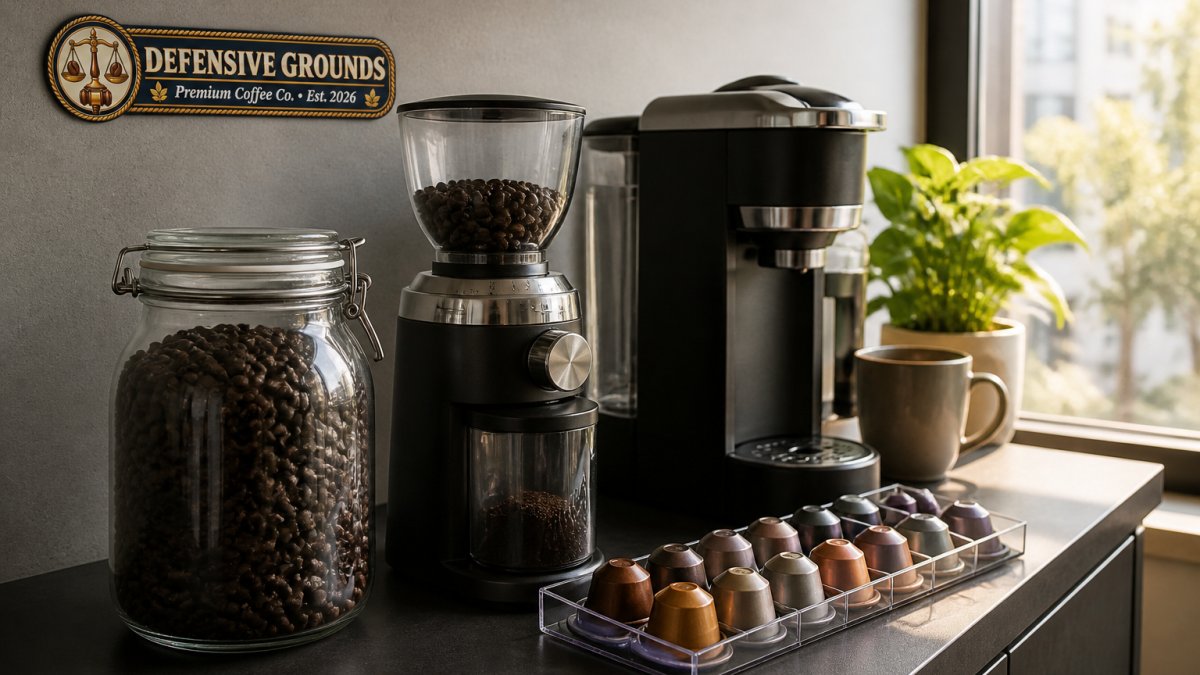
Keep the bulk supply in a cabinet, not on the counter. Only the day's coffee sits out.
Pro Tip
Label the canister with the roast date, not the purchase date. It tells your team exactly how fresh the coffee really is.
For low-effort freshness, our 12 Pack Single Serve Coffee Capsules are sealed with no oxygen inside, so each cup stays fresh until it's opened.

Step 2: Learn How to Store Coffee Beans for a Shared Kitchen
The best way to store coffee beans is whole, sealed, and at room temperature. Keep them in an opaque airtight container in a cool cabinet, away from the stove and the brewer. But in a shared kitchen, the container is only half the solution, the other half is the workflow around it.
Whole beans hold freshness longer than grounds because there's less surface exposed to air. Buy in amounts your team finishes within a few weeks.
Freshness Timelines for Whole Beans
Use these practical windows as a planning guide, not a guarantee, roast date, packaging, and storage conditions all shift the numbers:
- Unopened, sealed bag: best flavor within 2-4 weeks of the roast date; still usable for several weeks beyond that.
- Opened whole beans in an airtight canister: peak flavor for about 1-2 weeks; noticeably flatter after 3-4 weeks.
- Opened whole beans in a rolled bag with a clip: peak flavor for about 1 week; decline accelerates after that.
- Beans stored near heat or light: flavor can drop within days regardless of container.
Label the canister with the roast date, not the purchase date. That single habit tells your team exactly how fresh the coffee really is and prevents the "mystery bag" problem that plagues shared kitchens.
Office Workflow Rules That Protect Beans
- Portion before the rush. Fill a small "brew now" jar each morning so the bulk canister stays closed during peak hours.
- Keep a dry scoop in the canister. A wet spoon introduces moisture and clumps.
- Skip the refrigerator. Condensation forms every time you open the container.
- Skip the freezer for daily-use beans. Only freeze sealed bags you won't touch for a month or more.
Watch Out
Storing beans in the fridge is the most common mistake we see. Moisture builds up, the oils degrade, and the coffee tastes dull within days.
If your team can't finish a bag within a few weeks, buy smaller amounts more often. Freshness is easier to protect when the supply matches actual consumption.
Step 3: How to Keep Ground Coffee Fresh When the Whole Team Uses It
Ground coffee loses freshness faster than whole beans. The fix is to grind in small batches and seal what's left right away.
If your office uses pre-ground coffee, buy smaller bags and reseal them tightly after every use. A clip on a rolled bag beats an open bag, but an airtight container beats both.
Try this routine:
- Grind only what you'll brew that morning
- Seal the rest in an airtight container within minutes
- Keep the container in a dark cabinet
- Use up open ground coffee within a week or two
For teams that want speed without waste, our 60 Pack Single Serve Coffee Capsules keep each serving sealed until brew time.

Step 4: Choose the Best Coffee Storage Containers for an Office
The best coffee storage containers for an office are opaque, airtight, and sized to your daily use. Glass looks nice but lets light in. Clear plastic has the same problem.
Here's how the main options compare:
| Container Type | Light Protection | Air Seal | Best For |
|---|---|---|---|
| Opaque airtight canister | Strong | Strong | Daily whole beans |
| Ceramic jar with gasket | Strong | Good | Small teams |
| Clear glass jar | Weak | Varies | Short-term display only |
| Original vented bag with clip | Moderate | Moderate | Unopened backup supply |
| Single-serve capsules | Strong | Strong | Zero-fuss offices |
Match the container to how fast your team drinks the coffee. A big canister that sits half-full for a month defeats the purpose.
12 Pack Single Serve Coffee Capsules →
Step 5: How Long Does Brewed Coffee Stay Fresh in a Break Room?
Brewed coffee stays fresh for about 30 minutes on a warmer before flavor drops off. After an hour, it turns bitter and stale.
The practical answer for an office: brew smaller pots and brew more often.
Follow these holding rules:
- Keep brewed coffee on a warmer no more than 30 minutes
- Use a thermal carafe for longer stretches
- Never reheat leftover coffee
- Dump the pot at the end of the morning rush
Leftover coffee has a second life. Freeze it in ice cube trays and drop the cubes into iced coffee instead of watering it down.
Step 6: Plan Batch Sizes and a Cleaning Schedule for Shared Equipment
Fresh coffee needs clean equipment. Oils build up in grinders and brewers, and old residue makes even fresh beans taste stale. This section turns batch planning and maintenance into a simple routine any office manager can run.
Estimate Daily Use Before You Order
Plan your buying around actual consumption, not guesswork. Count how many cups your team brews on a typical day, then multiply by the number of brewing days between deliveries.
A simple worksheet:
- Cups per day: count actual brews, not headcount.
- Grams per cup: about 10 grams of ground coffee per 6-ounce cup is a common starting point.
- Daily need: cups × grams.
- Order size: daily need × brewing days between deliveries, rounded down slightly so stock turns over.
If the math says your team uses 400 grams a day and orders arrive every two weeks, a 5-kilogram order is too much, you'll be drinking stale coffee by week three.
A Simple Cleaning Checklist
Put maintenance on a schedule so it actually happens. Assign owners and post the checklist where the team can see it.
Daily
- Rinse the brewer and carafe.
- Wash cups and spoons.
- Wipe down the counter and grinder exterior.
Weekly
- Brush out the grinder burrs.
- Deep clean the brewer parts according to the maker's instructions.
- Wash the carafe with hot soapy water.
Monthly
- Descale the brewer, more often if your water is hard.
- Check the water reservoir for film or odor.
- Inspect canisters and gaskets for cracks or stale residue.
Key Takeaway
A clean grinder and a descaled brewer do more for flavor than most upgrades. Freshness starts with clean equipment.
Troubleshooting: Stale Coffee or Dirty Equipment?
When coffee tastes off, distinguish storage problems from equipment problems before you blame the beans:
- Flat, papery taste: likely stale beans, check the roast date and storage.
- Rancid or oily smell: old residue in the grinder or brewer; clean thoroughly.
- Bitter, harsh cup: often over-extraction or a dirty brewer; check the grind and descale.
- Sour or weak cup: under-extraction or stale grounds; check the grind and freshness.
If your coffee already tastes flat, check the roast date first. Old beans can't be rescued by better storage. Start with fresh coffee, then protect it.
Common Mistakes to Avoid (and How to Fix Stale Coffee)
Most stale-coffee problems trace back to a handful of habits. Here's how to spot them and fix each one.
- Open bag on the counter: move beans to a sealed canister
- Beans in the fridge: store at room temperature instead
- One giant bulk order: buy smaller amounts more often
- Dirty grinder: brush the burrs weekly
- Full pot sitting all day: brew smaller batches
If your coffee already tastes flat, check the roast date first. Old beans can't be rescued by better storage.
That's where we come in. Our Best Sellers Sample Pack lets a small firm try six roasts before committing to a full supply.

Frequently Asked Questions
Should office coffee be stored in the refrigerator?
Usually no. A shared office fridge opens and closes all day, and every cycle pulls warm, humid air into the bag or container. That moisture condenses on cold beans and speeds up staling. Keep whole beans and ground coffee in an airtight container at room temperature, away from the oven, dishwasher, and direct sun. The freezer only makes sense for long-term storage of unopened bags, and even then you should let the bag come to room temperature before opening it so condensation does not form on the beans.
How long do coffee beans stay fresh after opening?
Whole beans hold their peak flavor for about two to four weeks after the bag is opened when stored in an airtight container at room temperature. After that they are still safe to brew, but aroma and brightness fade. For an office, write the open date on the container lid so whoever restocks knows what is current. Buying smaller amounts more often beats stocking a year of coffee at once. Ground coffee moves faster, so plan on roughly one to two weeks of peak freshness once the seal is broken.
How do you keep brewed coffee fresh in a break room?
Brew in smaller batches and hold it in a thermal carafe rather than an open glass pot on a hot plate. Most drip coffee tastes best within 30 to 60 minutes of brewing, and a burner left on for hours turns it bitter and burnt. If you brew ahead, transfer the coffee to a preheated insulated carafe and skip the fridge entirely. Leftover coffee can be frozen into ice cubes for iced drinks, but do not reheat yesterday's pot. Clean the carafe and brew basket daily so old oils do not carry over into the next batch.
How often should an office coffee maker be cleaned and descaled?
Rinse the brew basket and carafe daily, and run a water-only cycle at the end of each week. A full cleaning with a coffee-specific cleaner once a month keeps oils from building up in the lines. Descale every one to three months depending on how hard your water is and how many pots you brew; if the machine is slow or the coffee tastes flat, descale sooner. Clean the grinder every week or two by running grinder cleaning tablets through it, and wipe the hopper so old grounds do not sit in the chute.
Keeping a shared break room stocked with fresh coffee is a daily grind, and most offices lose that battle by week two. Defensive Grounds makes it easier with specialty-grade coffee roasted to order, sealed single-serve capsules that stay fresh until opened, and free shipping anywhere in the United States. Stock your break room with coffee that holds up through the longest billing cycle, and give your team a cup worth the walk to the kitchen.