Espresso Roast vs Dark Roast Coffee: What to Buy
Last Updated: November 3, 2026
Quick Summary
Espresso roast is not a roast level but a marketing label for beans intended for espresso, while dark roast describes how far beans were roasted. A bag labeled espresso roast can hold light, medium, or dark beans, and dark roast can pull a perfectly good shot.
- Dark roast tastes bolder and more bittersweet with low acidity; espresso roast flavor depends on the actual roast level in the bag.
- Dark beans are more porous and soluble, so grind slightly coarser, lower brew temperature, and shorten the ratio.
- Start dark roast at 18 g dose, 30-36 g yield, 22-27 seconds, and 195-199°F brew temperature.
- Caffeine depends mostly on dose, bean type, and brew method, not on how dark the beans were roasted.
- Match the roast to the drink: medium or medium-dark for straight espresso, dark roast for cappuccino or latte.
Table of Contents
- Espresso Roast vs Dark Roast Coffee: The Difference in One Minute
- Espresso Roast vs Dark Roast Coffee Taste: What Actually Changes in the Cup
- Can You Use Dark Roast for Espresso? Yes, With One Adjustment
- How Roast Level Changes Extraction, Grind, and Your Dial-In Routine
- Espresso vs Dark Roast Caffeine: The Answer Most People Get Wrong
- The Best Roast for Espresso Depends on the Drink You Order
- Freshness, Degassing, and Storage: The Variable Nobody Plots
- Stocking the Break Room: Which Defensive Grounds Bag Fits Your Firm
- Frequently Asked Questions
Espresso Roast vs Dark Roast Coffee: The Difference in One Minute
Espresso roast is not a roast level. It is a marketing label describing how beans are intended to be used, while dark roast describes how far the beans were taken through roasting.
Below, we break down what changes in the cup, how roast level affects your grinder and dial-in routine, and which bag to buy for the drinks your office actually drinks.
Why the Labels Confuse Almost Everyone
Roast labels are not standardized. "Espresso roast" tells you the roaster's intent, not the bean's color, and "dark roast" tells you the roast profile without saying anything about brew method. A roaster can take beans well into second crack and still call the result an espresso roast because it performs in a pressurized basket.
The two terms live on different axes: brew method and roast level. Separate them and the shelf stops being confusing.
Espresso Roast vs Dark Roast Coffee Taste: What Actually Changes in the Cup
Dark roast tastes bolder, roastier, and more bittersweet, with low acidity. Espresso roast taste depends on the actual roast level inside the bag. The label does not predict flavor; the roast profile does.
Acidity, Bitterness, Sweetness, and Body Side by Side
| Trait | Light/Medium Espresso Roast | Dark Roast |
|---|---|---|
| Acidity | Noticeable, fruit-forward | Low to none |
| Bitterness | Mild | Pronounced, bittersweet |
| Sweetness | Caramel, sugar-browning | Dark chocolate, molasses |
| Body | Medium, syrupy | Heavy, coating |
| Best with milk | Brightens through milk | Holds up under milk |
Roasting drives caramelization and the Maillard reaction, which build sweetness and aroma. Push further into second crack and those sugars scorch, trading fruit for roast character. Neither is better. They are different tools.
Can You Use Dark Roast for Espresso? Yes, With One Adjustment
Yes. Dark roast works in an espresso machine, and plenty of traditional espresso is built on it. The adjustment is grind and dose: dark beans are more porous and more soluble, so they extract faster and can turn bitter in a hurry.
French Roast is a deep dark roast of high-scoring African coffees with a bittersweet flavor and low acidity.
Best for: offices pulling traditional dark shots or milk drinks. Skip if: you want fruit and brightness in a straight espresso.
How Roast Level Changes Extraction, Grind, and Your Dial-In Routine
Roast level changes extraction because darker beans are more soluble. Their cell structure has been broken down further during roasting, so water reaches the soluble compounds faster.
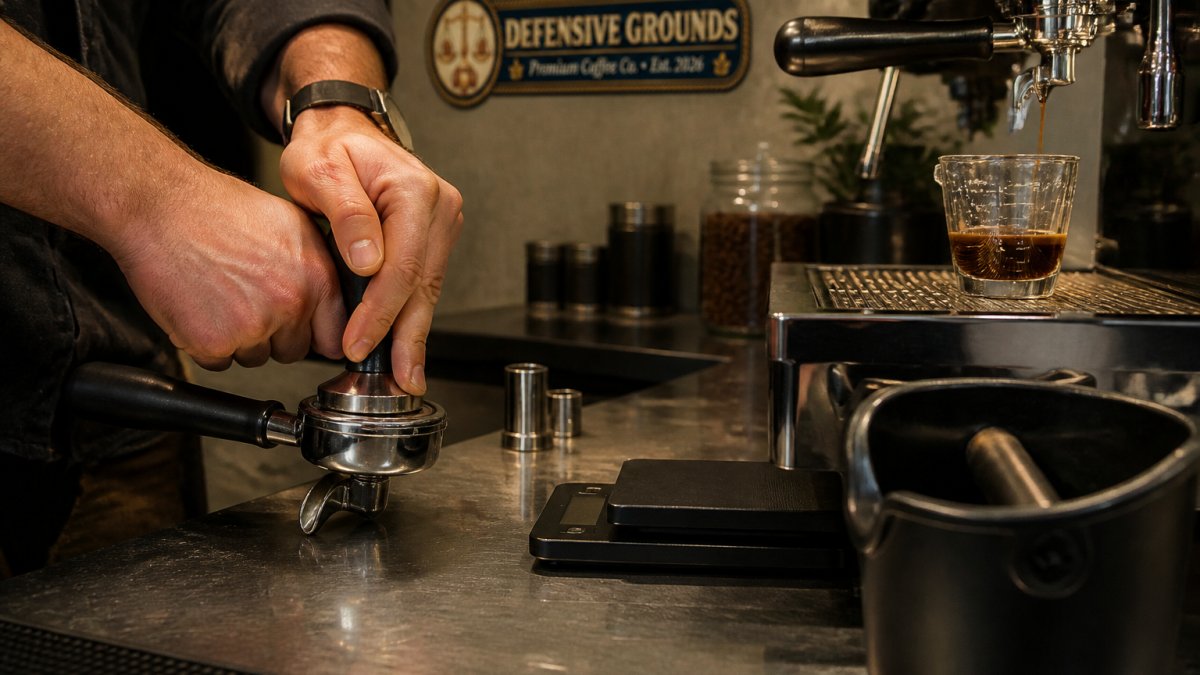
Most dial-in advice is written for one roast level and then applied to another. A recipe that works for a light espresso roast will often run bitter on a dark roast, and a dark-roast recipe will often run sour and thin on a light roast.
Starting Ranges by Roast Level
These are common starting points, not fixed rules. Treat them as a first shot, then taste and adjust.
| Variable | Light / Medium Espresso Roast | Dark Roast |
|---|---|---|
| Dose (double basket) | 18 g | 18 g |
| Yield | 36-40 g | 30-36 g |
| Brew time | 27-32 seconds | 22-27 seconds |
| Brew temperature | 200-203°F | 195-199°F |
| Grind | Finer | One to two steps coarser |
A common pattern is to keep the dose steady and change yield and grind first, because those two variables move flavor fastest. Temperature is a fine-tuning lever; drop it a few degrees if dark shots taste ashy or harsh, and raise it slightly if lighter shots taste sour and thin.
A Repeatable Dial-In Routine
- Weigh your dose on a scale to 0.1 g so you know what you are changing
- Pull a shot at the starting yield and time for your roast level
- Taste and decide whether the shot is sour (under-extracted) or bitter and drying (over-extracted)
Under-extraction shows up sour, salty, and thin. Over-extraction shows up bitter, drying, and hollow. Dark roast lands on the bitter side far more easily because its solubles leave the bean quickly, so dial in with restraint.
Watch out: if a dark roast tastes ashy no matter how coarse you grind, the problem may be brew temperature or a stale bag rather than the grind, so check the roast date before you chase the grinder setting.
Why the Same Grinder Setting Does Not Travel
Grind settings are not portable between beans, bags, or roast levels. A dark roast rested two weeks behaves differently from the same coffee three days off the roaster, because degassing changes how water moves through the puck. If you switch bags, reset to the starting range for that roast level. Offices that rotate beans should keep a simple log taped to the machine so the next person starts from a known point.
Espresso vs Dark Roast Caffeine: The Answer Most People Get Wrong
Espresso vs dark roast caffeine is not a roast-level comparison at all. Caffeine content depends mostly on dose, bean type, and brew method, not on how dark the beans were roasted.
What actually moves caffeine is how much coffee you use. A double shot built on a larger dose delivers more caffeine than a single, regardless of roast. For the deeper breakdown, our guide on light vs dark roast caffeine walks through the comparison.
The Best Roast for Espresso Depends on the Drink You Order
The best roast for espresso is the one that suits the drink in the cup, but the label on the bag will not tell you which one that is. "Espresso roast" is generally a marketing or intended-use label, not a standardized roast level. It tells you the roaster built the coffee to perform in a pressurized basket, not how dark the beans actually are.
How to Read the Bag Before You Buy
- Roast date, not just roast level: a printed roast date tells you how fresh the coffee is; a "best by" date alone does not. Freshness changes the cup more than the label does.
- Roast description: look for words like "light," "medium," "medium-dark," or "dark" in the description, not just "espresso." If the bag only says "espresso roast," check the roaster's product page for the actual roast level.
- Bean appearance: dark roasts are visibly darker and often oily on the surface; light and medium roasts are matte and lighter brown. Oily beans are not automatically better, but they do signal a darker roast that will extract faster.
- Intended use: a bag labeled for espresso is a starting point, not a restriction. Many medium and dark roasts labeled for drip or filter pull excellent shots.
Match the Roast to the Drink
- Straight espresso: medium or medium-dark roast, brighter and more layered, with enough solubility to build body without turning bitter.
- Cappuccino or latte: dark roast, because bold, roasty, bittersweet flavor survives milk better than delicate fruit notes.
- Americano: medium to dark, depending on whether you want fruit and acidity or chocolate and depth.
- Decaf after hours: dark roast decaf, because the darker profile masks some of the flavor differences people notice in decaf.
African Espresso is available for this decision. If your office splits between black-coffee drinkers and latte drinkers, buy for the drink you make most, then keep one bag of the other style on hand for the minority.
The Like-for-Like Test That Settles the Argument
Flavor claims about espresso roast versus dark roast are only useful if you control the other variables. A transparent comparison uses the same dose, water, grinder, and extraction target for both coffees, then tastes them side by side.
Watch out: do not assume a bag labeled "espresso roast" is dark, or that a dark roast cannot be used for espresso. Both assumptions lead to buying the wrong coffee for the drink your firm actually orders.
Freshness, Degassing, and Storage: The Variable Nobody Plots
Coffee releases carbon dioxide for days after roasting, and that gas interferes with even extraction.
Store beans in an airtight container, away from light and heat, and grind immediately before brewing. If you are weighing whether roasted-to-order beans justify the cost, our piece on whether roasted-to-order coffee is worth it covers the trade-off. For a practical method, see our guide to evaluating fresh coffee beans.
Watch out: buying dark roast in bulk because it is on sale defeats the purpose. Oily dark beans go stale faster than lighter roasts once opened, so match your order size to how fast the firm drinks it.
Stocking the Break Room: Which Defensive Grounds Bag Fits Your Firm
Match the bag to the drink, not to the label.
- 6 Bean Blend ($24.99): a dark roast house blend explicitly built for espresso, and the safest single bag for a mixed office.
- Italian Roast ($24.99): our darkest roast, a slow-roasted Arabica/Robusta blend for anyone who wants maximum depth.
- French Roast ($24.99): bold and bittersweet with low acidity, ideal for milk drinks.
- Decaf Espresso ($24.99): water-process decaf roasted dark for espresso, for the late-night crowd.
Every bag is specialty-grade and roasted to order, with free shipping anywhere in the United States.


The espresso roast vs dark roast coffee question is really about what your firm drinks and how fast you go through a bag.
Defensive Grounds roasts to order for legal teams that run on caffeine and deadlines, with specialty-grade beans and free shipping anywhere in the United States.
Frequently Asked Questions
Is espresso roast the same as dark roast?
No. Espresso roast is a label for beans intended for espresso brewing, and it says nothing firm about how dark they were roasted. Dark roast describes the roast level itself, past second crack, with an oily surface and diminished origin character. A bag marked espresso roast can hold a medium roast, a dark roast, or a blend of both. Read the roast description on the bag rather than trusting the word espresso to tell you how dark the beans are.
Which has more caffeine, espresso roast or dark roast coffee?
Roast level barely moves caffeine content, so the espresso vs dark roast caffeine question is mostly about serving size. Caffeine stays stable through roasting while the beans lose moisture and mass, so a darker bean weighs less but delivers a similar dose per scoop. A 1 oz shot of espresso holds roughly 60 to 70 mg of caffeine, while a 12 oz drip coffee often lands near 120 mg or more. Measure your dose and yield instead of guessing from the roast.
Can you use dark roast for espresso?
Yes, and plenty of shops do. Dark roast beans are more porous and soluble, so they extract faster and pull a heavier, more syrupy shot with chocolate and caramel notes. Grind slightly coarser than you would for a medium roast and shorten the ratio if the shot turns bitter. A dark roast house blend such as the Defensive Grounds 6 Bean Blend is built for exactly this, and its listing notes it works well in espresso.
Is espresso roast dark or medium?
It can be either. Specialty roasters increasingly pull espresso with medium roasts to keep fruit and floral notes intact, while traditional Italian-style espresso leans dark. The roast profile, not the word espresso, decides flavor. If a bag gives no roast level, look for color cues: an oily, near-black bean reads dark, while a dry, matte brown bean reads medium.
Does espresso roast taste different from dark roast coffee?
The comparison is not quite like for like, because espresso is a brew method and dark roast is a roast level. Brewed as espresso, a medium espresso roast tastes brighter with more acidity and fruit, while a dark roast tastes bolder with roasty, bittersweet, chocolate-heavy notes and low acidity. Brew the same dark roast in a drip machine and it reads smoother and less concentrated. The method and the roast both shape the cup.